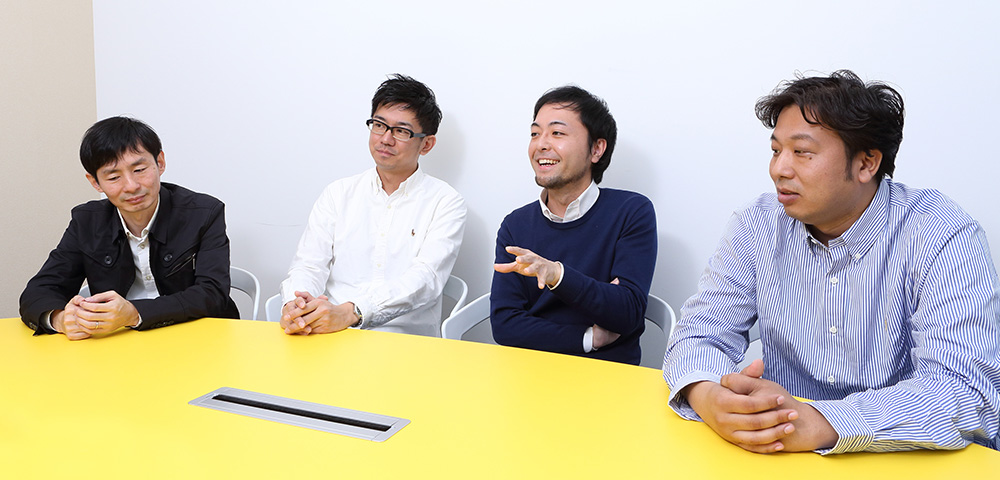
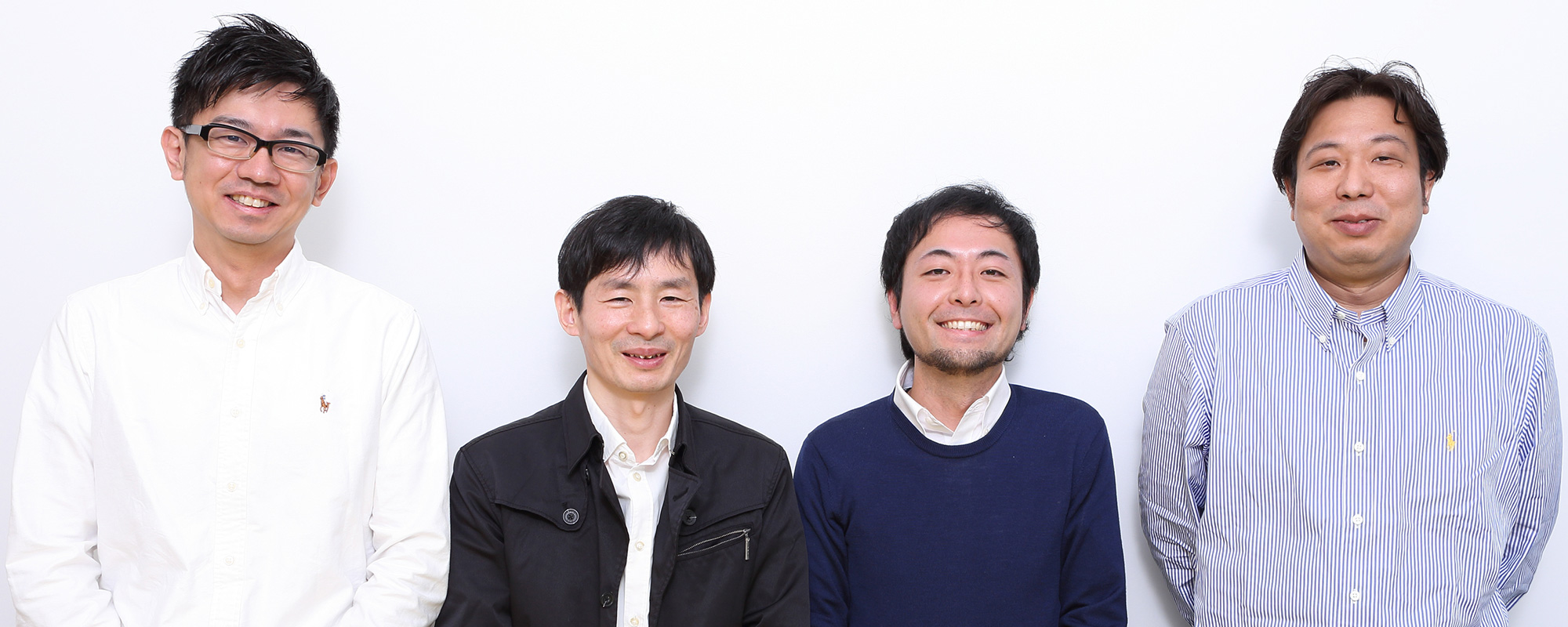
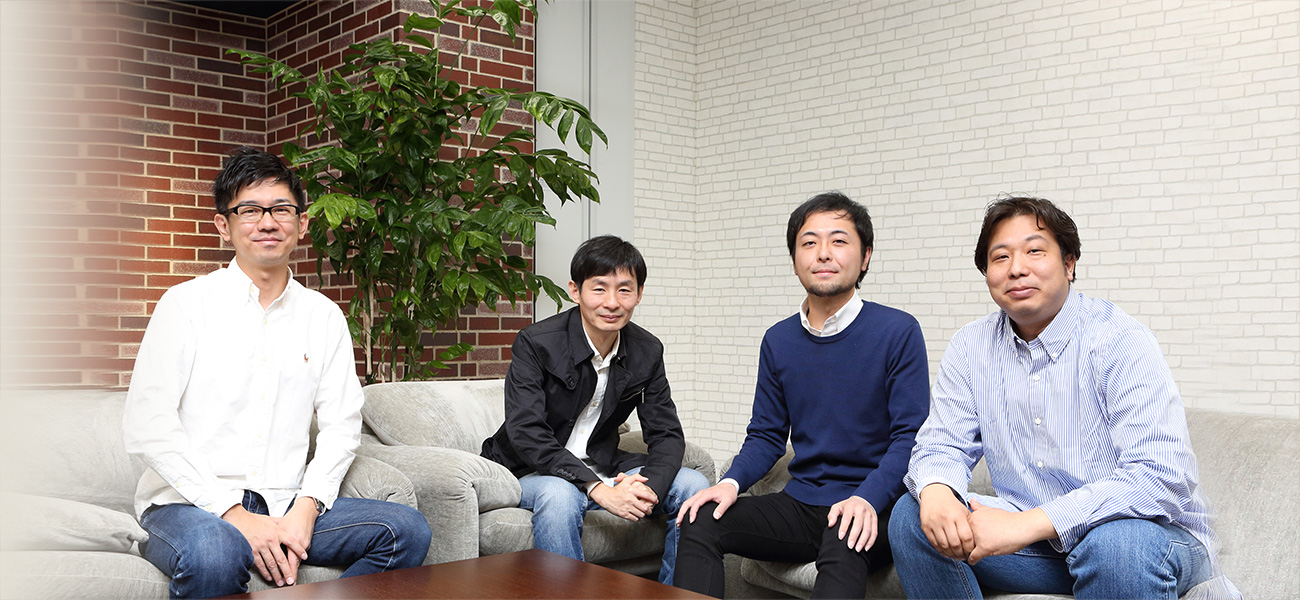
"SEGA FOOTBALL CLUB CHAMPIONS" Developer Interview
MEMBER PROFILE
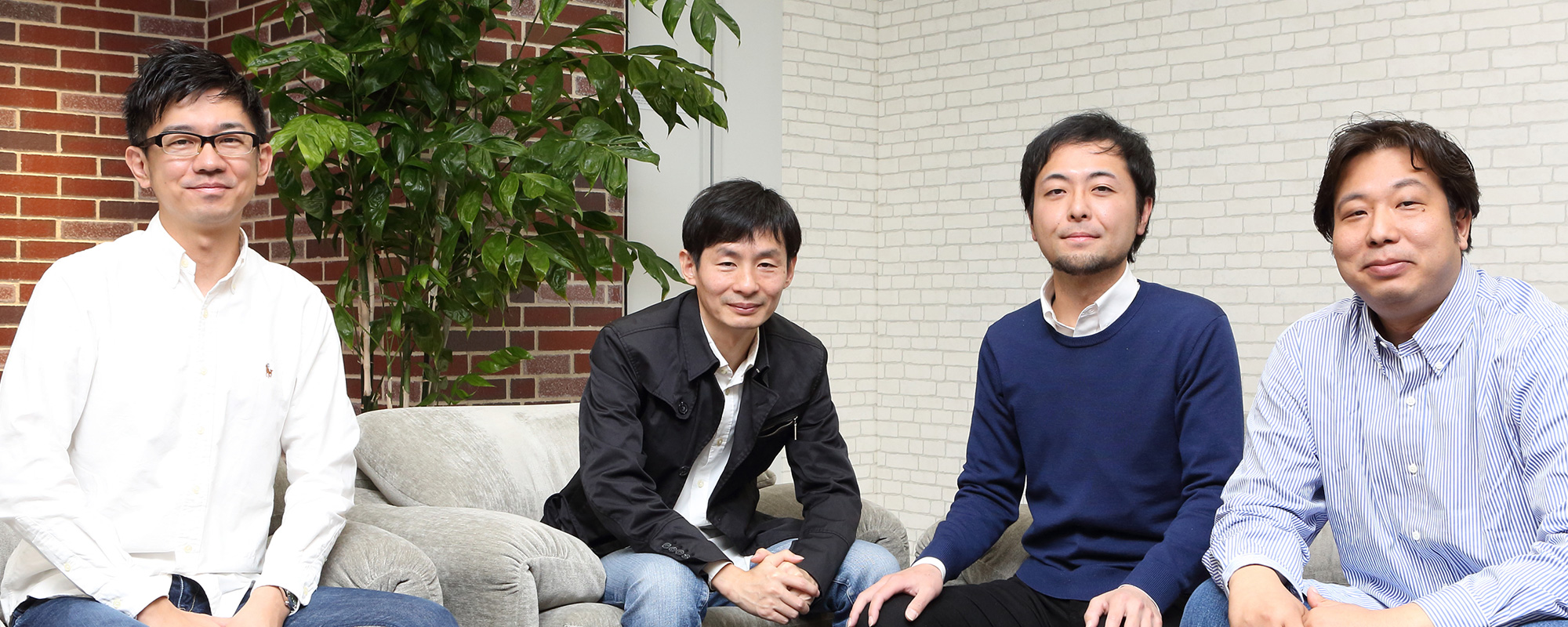
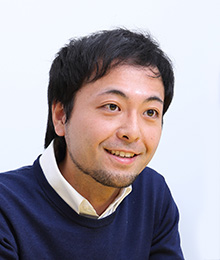
ProducerKatsuya Hisai
Joined in 2008.
Worked as a game designer on Sakatsuku 6 and Sakatsuku DS 2010. After serving as the director of Sakatsuku 7, he is now a producer for SFCC.
Game DirectorMasanobu Funakoshi
Joined in 2024.
Before arriving at SEGA, he built his career at multiple gaming companies. Serving as director for new mobile games, he oversaw project formation and ops. After directing the multiplatform development of SFCC, he now serves as the game director.
Lead Software EngineerTakumi Sugawara
Joined in 2018.
Worked as a client software engineer on Revolve8 and as a server programmer on seven other SEGA titles before stepping in as a sub-lead client software engineer on SEGA Pocket Club Manager. Now serves as the lead software engineer on SFCC.
Lead ArtistYusuke Miura
Joined in 2005.
Served as the lead artist on Galileo Factory 3, SEGA World Drivers Championship, Mario & Sonic at the Olympic Games™ Tokyo 2020 - Arcade Edition, and other titles. He joined SFCC as a concept artist and now leads the game's art direction.
In the Sakatsuku series of management sims, users take on the role of a football club manager, choosing players for matches, running the club, and competing for global greatness.
Since debuting in 1996, the franchise has come to multiple platforms. We spoke with the team behind SEGA FOOTBALL CLUB CHAMPIONS, their first title in eight years.
Could you tell us the story behind the series' comeback?
Hisai
We started planning it about 5 years ago. At the time, we already had SEGA Pocket Club Manager on mobile, but I had been wanting to get back to our console game roots. We estimated that development would take about 3 years, which is the perfect amount of time between releases.
My division was responsible for the Sakatsuku IP, so that helped me get the project off the ground. From the outset, our goal was to create a hybrid title that combined console game elements with a free-to-play model.
Our team was originally full of experienced mobile game developers. We had thought of doing an initial launch on mobile before rolling the game out to consoles, but after extensive discussions, we decided on a simultaneous multi-platform release. That proved to be a major technical challenge. As we geared up for launch in the later stages of development, we brought Funakoshi on board.
Funakoshi
When I joined SEGA in 2024, development on SFCC was wrapping up. I was initially brought on to the project to oversee the game's rollout on PlayStation and Steam. As multi-platform director, I'd assess what platform-specific adjustments were necessary, including aspects outside of core gameplay. Having mainly worked on mobile games, PlayStation was a new experience for me. Despite that, I had faith in myself, so I pushed ahead.
As we discussed how to improve the game, my unique background let me offer a different perspective than my peers. After I talked with Hisai, our team structure changed dramatically within a week.
Hisai
Looking at the game at the time, I still felt there was room for improvement. Funakoshi's proposals helped me see that we had a clear path forward. I knew immediately that his proposals would bring about drastic changes to our original vision, so without hesitation, I restructured the team with him at the lead. This marked a major shift in his responsibilities. Even though he had only recently joined SEGA, his remarkable sense of urgency and leadership made for a smooth transition.
What improved after you restructured the team?
Funakoshi
We already had robust individual parts, such as the graphics and gameplay. However, I felt we could still improve how these elements fit together and strengthen the game's overall flow. Balancing monetization with the feel of a full console game proved to be a major challenge.
Let's take the league level mechanic as an example. A club consisting only of J.League players would inevitably fall behind clubs filled with players from stronger leagues. To balance the gameplay between users who wanted only players from the J.League and those using top-tier footballers, we added ways to beef up your club after clearing the game.
Hisai
We also made changes to Career Mode. Initially, users needed to scout at least 2 players to clear Career Mode. However, during the Closed Beta Test, longtime fans felt that gameplay built around in-game purchases wasn't true to the spirit of the series. Taking their feedback to heart, we decided to make these premium players optional. Creating a fun live-service game while preserving the classic Sakatsuku experience was really tough.
At launch, the game fortunately exceeded our expectations in terms of downloads, so we got off to a strong start. We also worked closely with our user base to improve the game, and our community-centric approach gave us some early momentum. After plenty of trial and error, we've reached a point where the game's live service is becoming more stable. Now, we're planning to reach even more people around the world as football hype builds in 2026.
What are the development team's main focuses and challenges?
Sugawara
The match simulation system was a big hurdle for us. When I joined the project during its prototype phase in winter 2021, the series' match engine was built upon generations of work, so its inner workings were difficult to grasp. To keep the series growing, we needed to understand the match engine. That's why rebuilding it was our first priority.
SEGA Pocket Club Manager, the previous game I worked on, emphasized simpler game design meant for portable play. However, I personally felt it didn't match the depth of the mainline console titles. That experience drove us to pour effort into optimizing SFCC's processing power to deliver rich, easy-to-pick-up gameplay even when users are on the go.
This title also has crossplay for mobile, PlayStation, and PC. Each platform has its own set of rules, so ensuring the game accommodated all of them was a huge undertaking. This is the sort of title that you can play on the go and then switch to your living room PlayStation all on one account, so we pay close attention to data synchronization and consistency.
Miura
Crossplay also presented numerous challenges for the artists. When I first joined, there were no plans for a PlayStation version. Development quickly moved forward as we brought over assets from past titles for a mobile release. By the time we decided to do a PlayStation release, it wasn't feasible to completely rebuild the player models. As a result, our technical artists worked closely with us to maximize the quality of our existing assets.
We wanted to live up to fans' expectations, as it had been 8 years since the last game in the series.
What's it like being on your team?
Sugawara
Our software engineers tend to be risk-averse, which is a trait we value in ops for live-service titles. I'm the kind of guy who pushes for gameplay improvements, so having veteran programmers with that mindset around is a huge help. We have a culture where teams can engage in logical discussions while maintaining mutual respect. And we couldn't do what we do without the younger programmers on our team. With a roughly fifty-fifty split of industry vets and younger employees, we've had people hired right after college take on leadership positions in just their second year with the company, and fresh perspectives from newcomers often steer the direction of development.
SEGA as a whole encourages interdepartmental communication, and we've been strengthening our connections with other divisions through study groups, roundtable discussions, and other initiatives.
Miura
As SFCC is a sports sim, many members of the art team work on UI. Some are passionate about sports, actively contributing ideas and references. Our workplace embraces proposals from young employees, especially those related to new technologies. In fact, a first-year artist suggested a new tool, and we implemented it. Their idea helped us create backgrounds a lot more efficiently. The team's openness to suggestions from younger staff is one of our strengths.
Funakoshi
When I stepped in as director, I became very conscious of our team culture. Programming takes time, so I focused on showing visible progress through design improvements first. That way, I could quickly establish credibility.
Hisai
You could really see the care Funakoshi had for the team, and he managed to keep everyone aligned without disrupting the team culture.
What do you think is a good mindset for developers to have going forward?
Hisai
While creating interesting content remains important, we must think carefully about how it reaches users. Game designers, artists, and programmers all share this responsibility. Everyone needs to cooperate and create the best possible experience for users.
Sugawara
We've been building a stronger connection between the development and operations teams. I encourage developers to think about creating strong assets that the ops team can leverage.
Miura
As an avid J.League fan, I propose ideas that I think would resonate with other fans. I also remind our art team that people around the world will engage with their creations. Beyond the game itself, we also propose designs for jerseys, towels, and other real-world merchandise.
What kind of people do you think would be a good fit for your team?
Funakoshi
Anyone who is willing to speak their mind and demonstrate leadership. We have a really supportive work environment here, so we want people to charge ahead instead of playing it safe.
Sugawara
Those with a background in development or live ops of large-scale online games will be able to put that experience to good use here. However, because we often tackle challenges such as multi-platform development by combining expertise from across the team, anyone, regardless of experience, who can proactively leverage their strengths would be a good fit for our team.
Miura
You don't need to be a football or sports fan to excel here. Anyone can make an impact. Some team members channel their passion for games and animation into the players we create.
Hisai
I'd love to work with people who connect with SEGA's philosophy of "Creativity is Genesis" and are passionate about crafting great gameplay.
What's next for SFCC?
Funakoshi
SFCC is designed for long-term play, so we'd like to keep incorporating feedback from our fans in major biannual updates. By gradually implementing elements from past console entries, we hope to build a game that users will keep coming back to for years to come.
Hisai
I've always wanted to create a generation-defining game. Moving forward, I'd like to keep improving what we bring to our users.