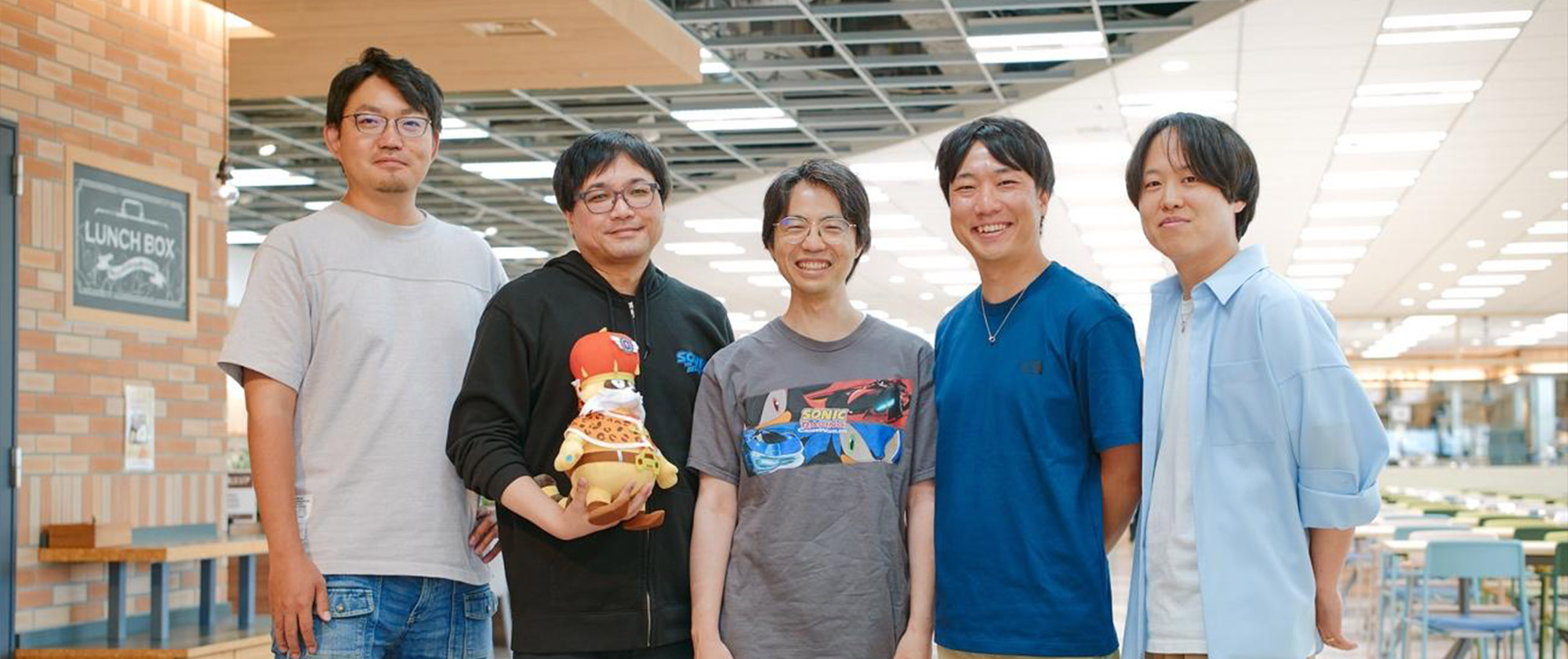
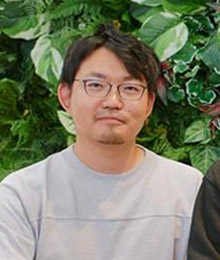
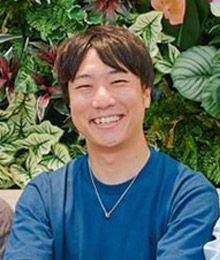
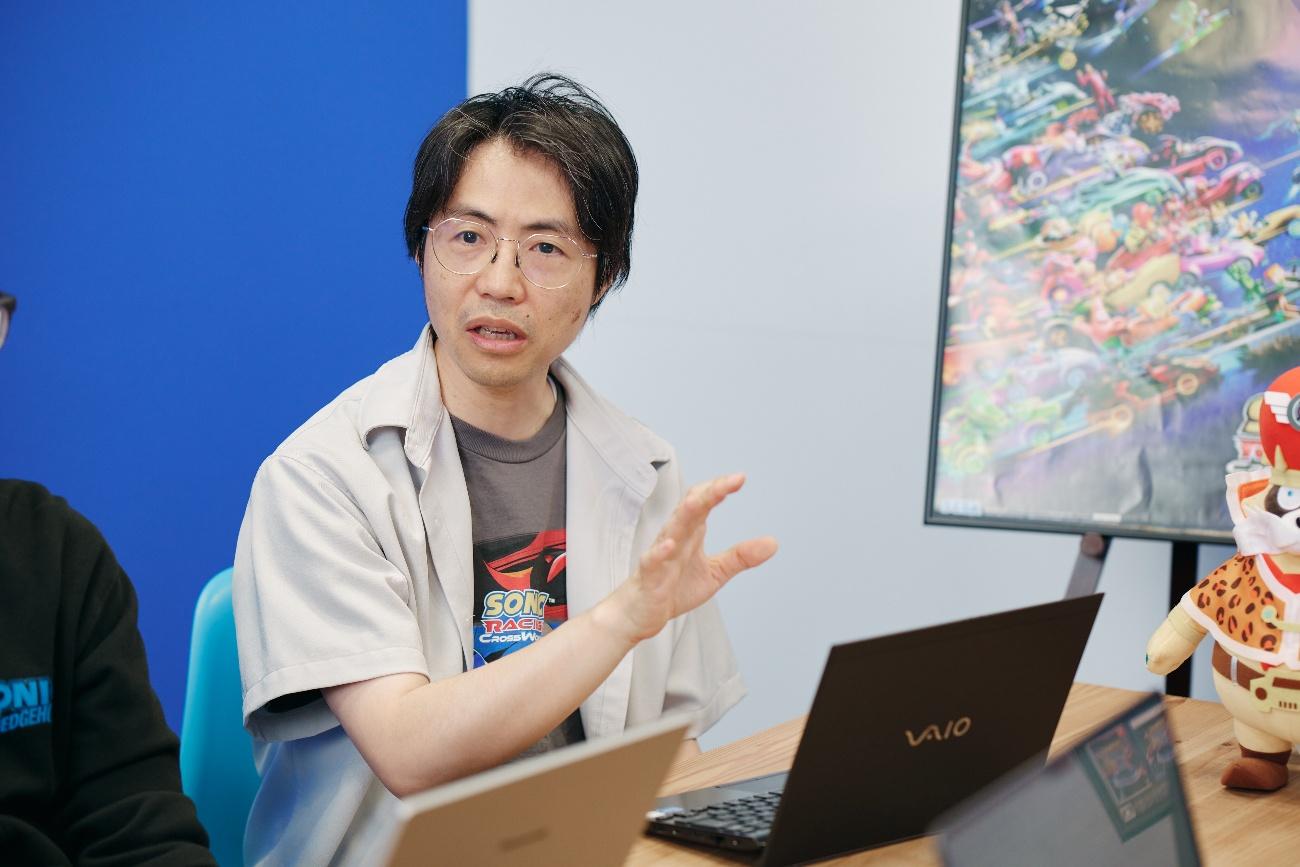
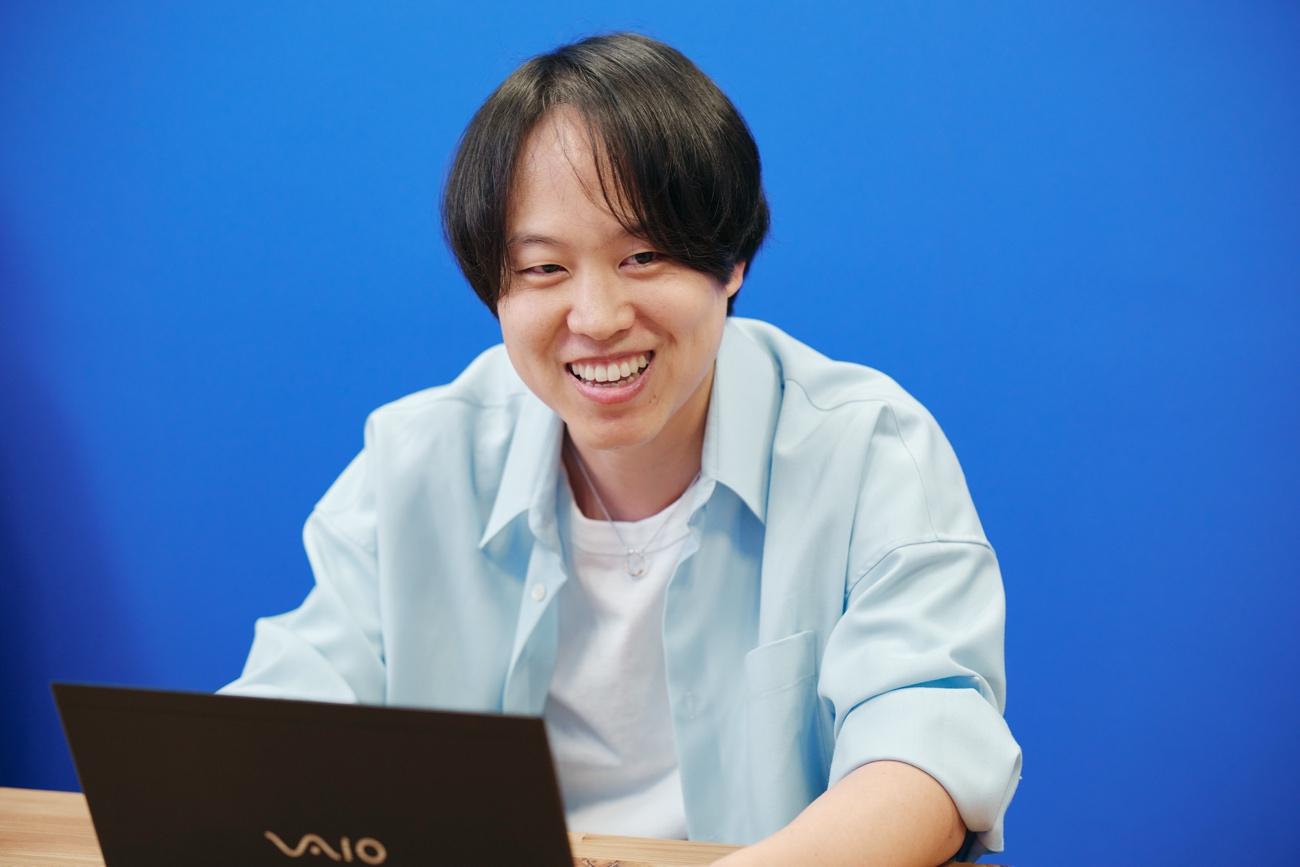
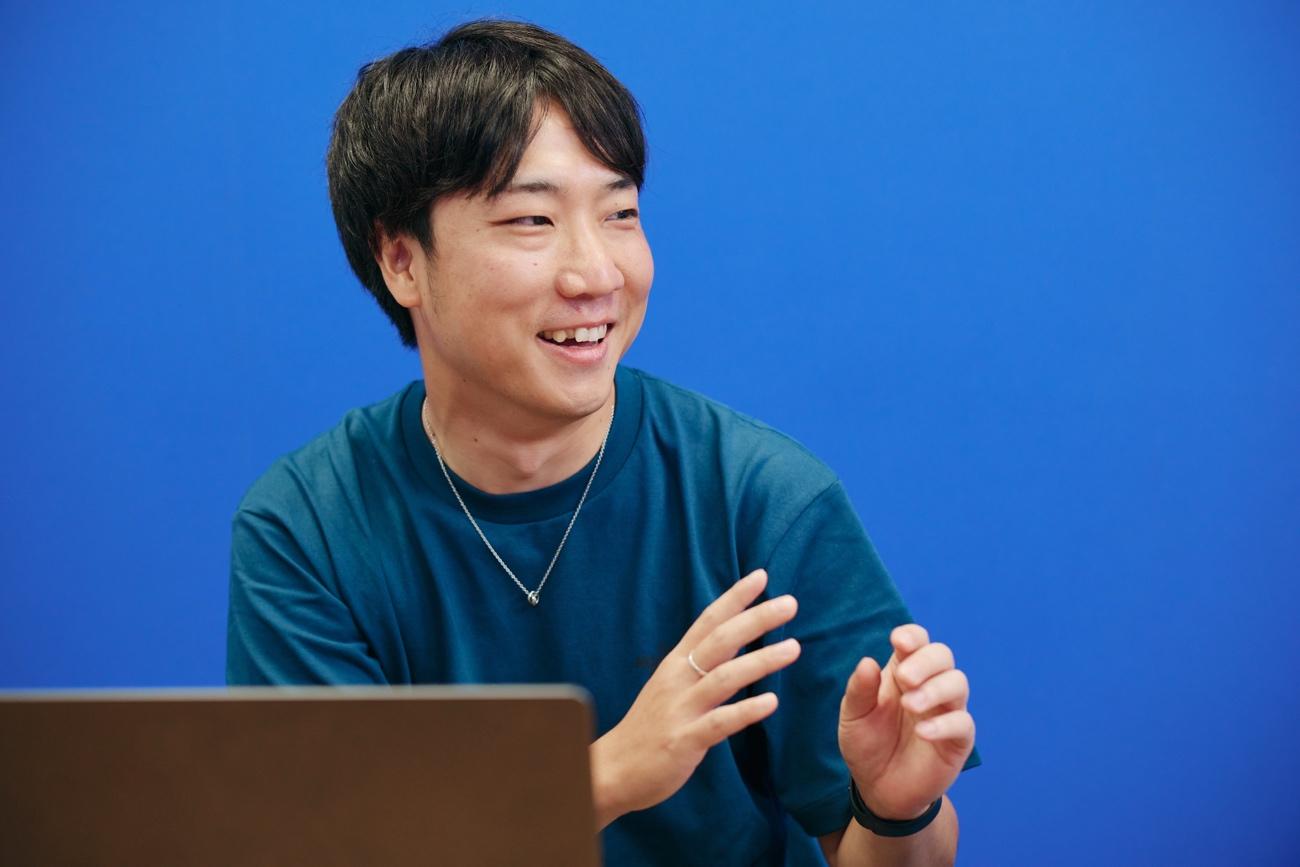
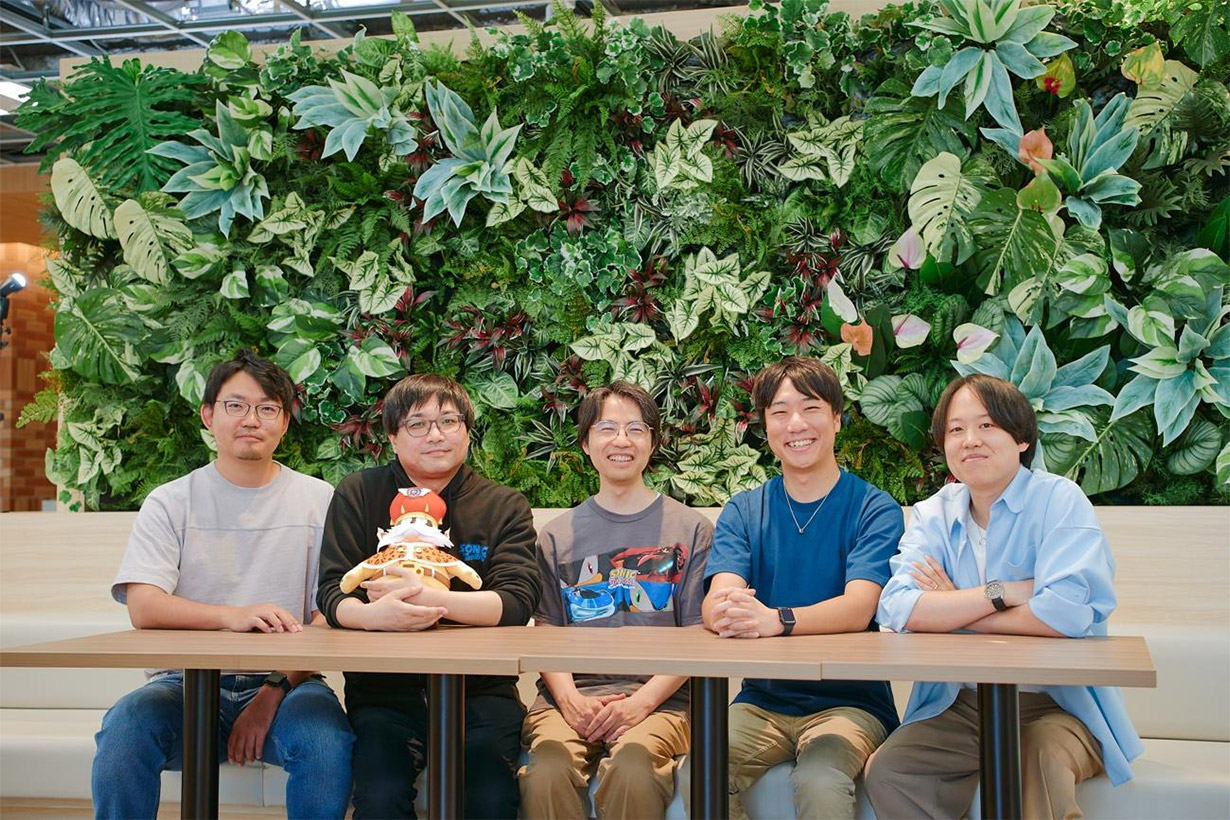
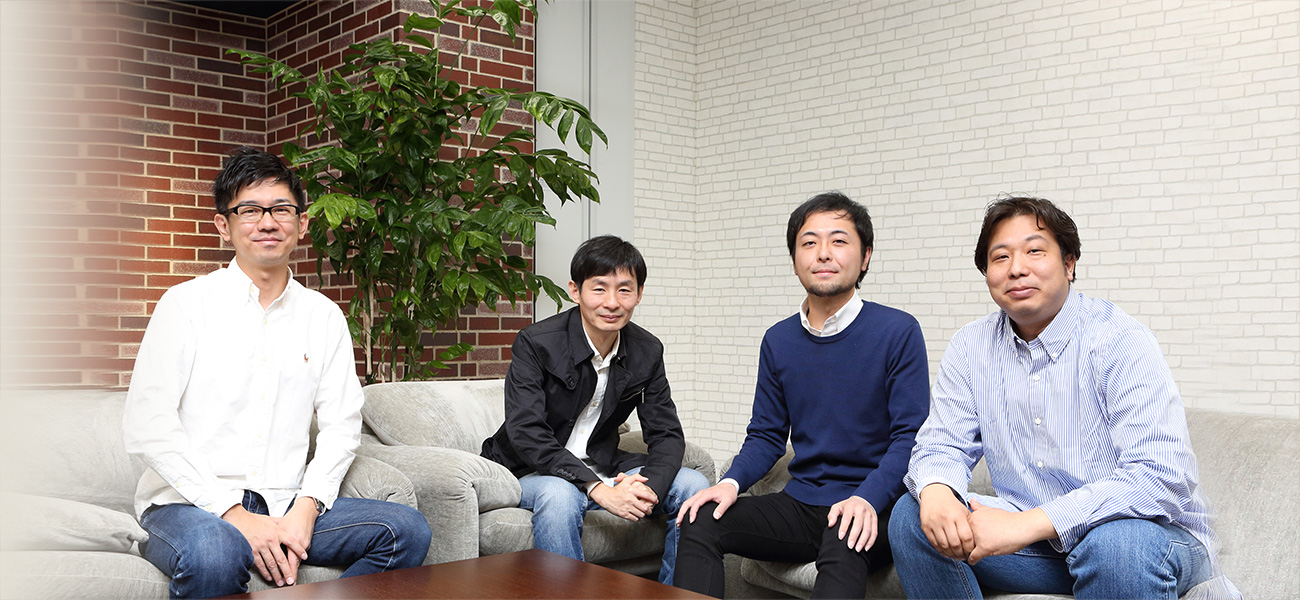
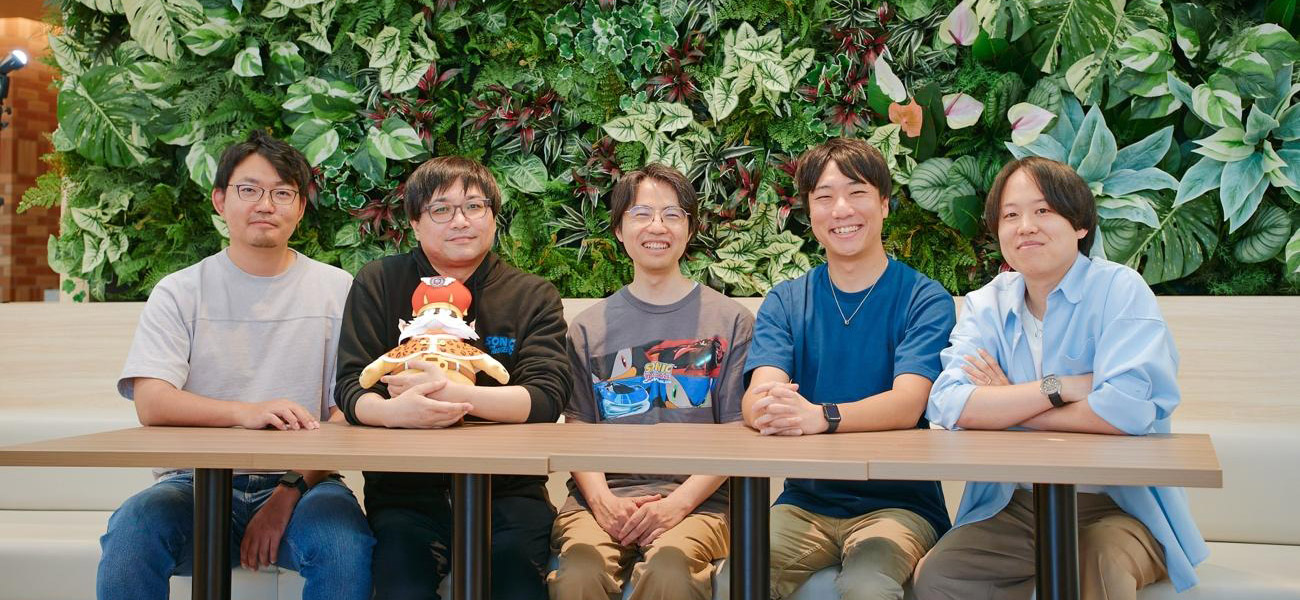
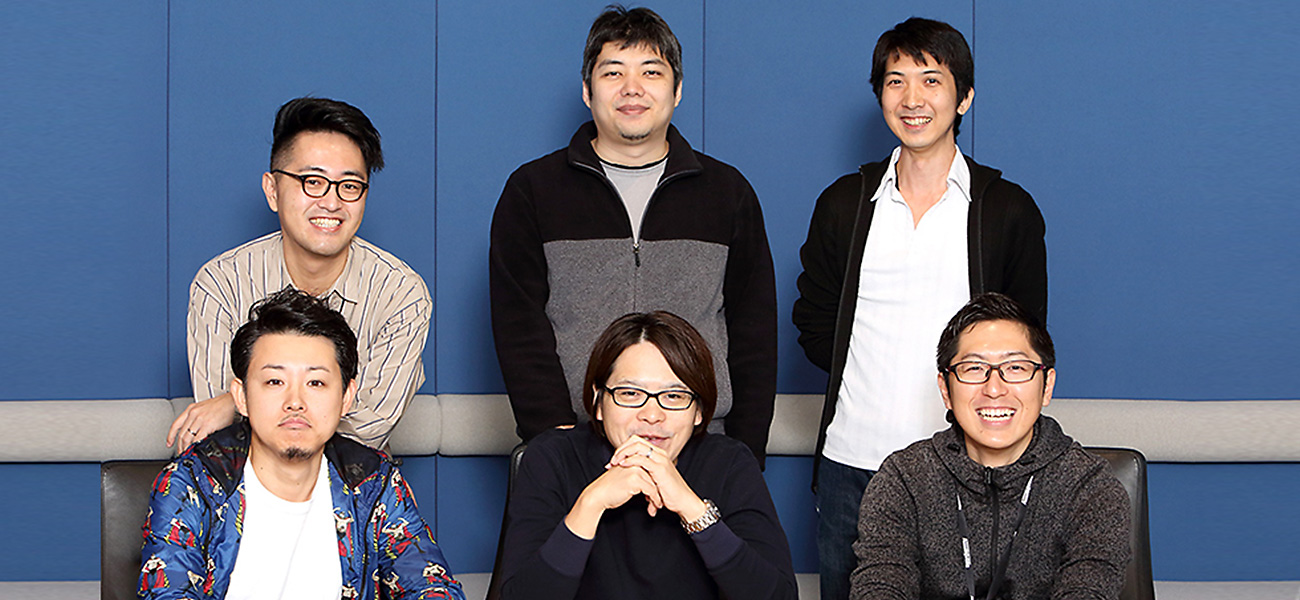
Assistant Producer / Operations ProducerSoyoo Park
Joined in 2014.
Joined SEGA's Product R&D Department right after finishing college. Served as a game designer on World Club Champion Football, a lead game designer on WCCF Footista, and assistant producer for Initial D THE Arcade before taking on his current role. Took on a concurrent role as an operations producer after Sonic Racing: CrossWorlds launched.
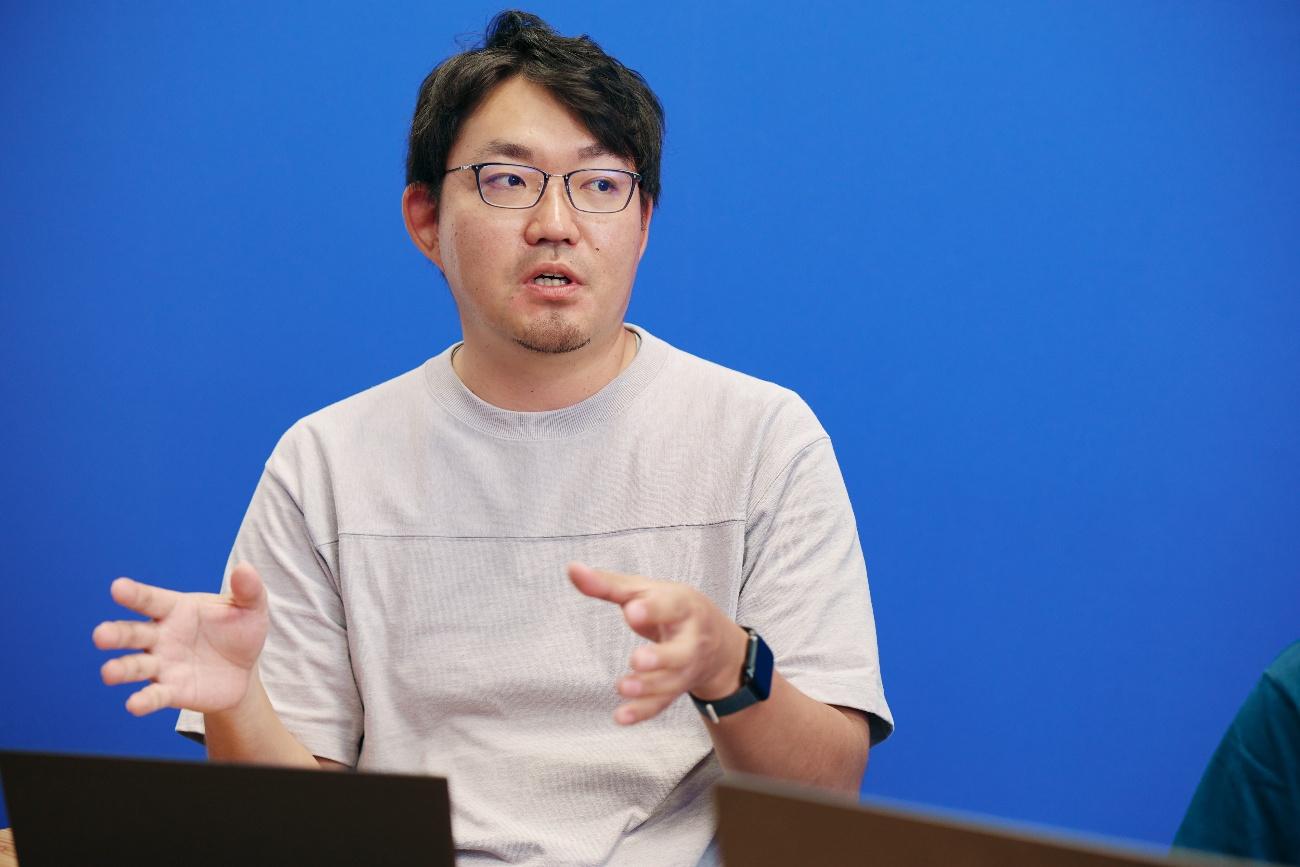
DirectorShingo Kawakami
Joined in 2010.
A mid-career hire who joined SEGA's Consumer R&D Department, where he worked on the Mario & Sonic at the Olympic Games series, including all summer and winter titles through the Tokyo 2020 installment. Currently oversees the game's creative vision as the on-site director.
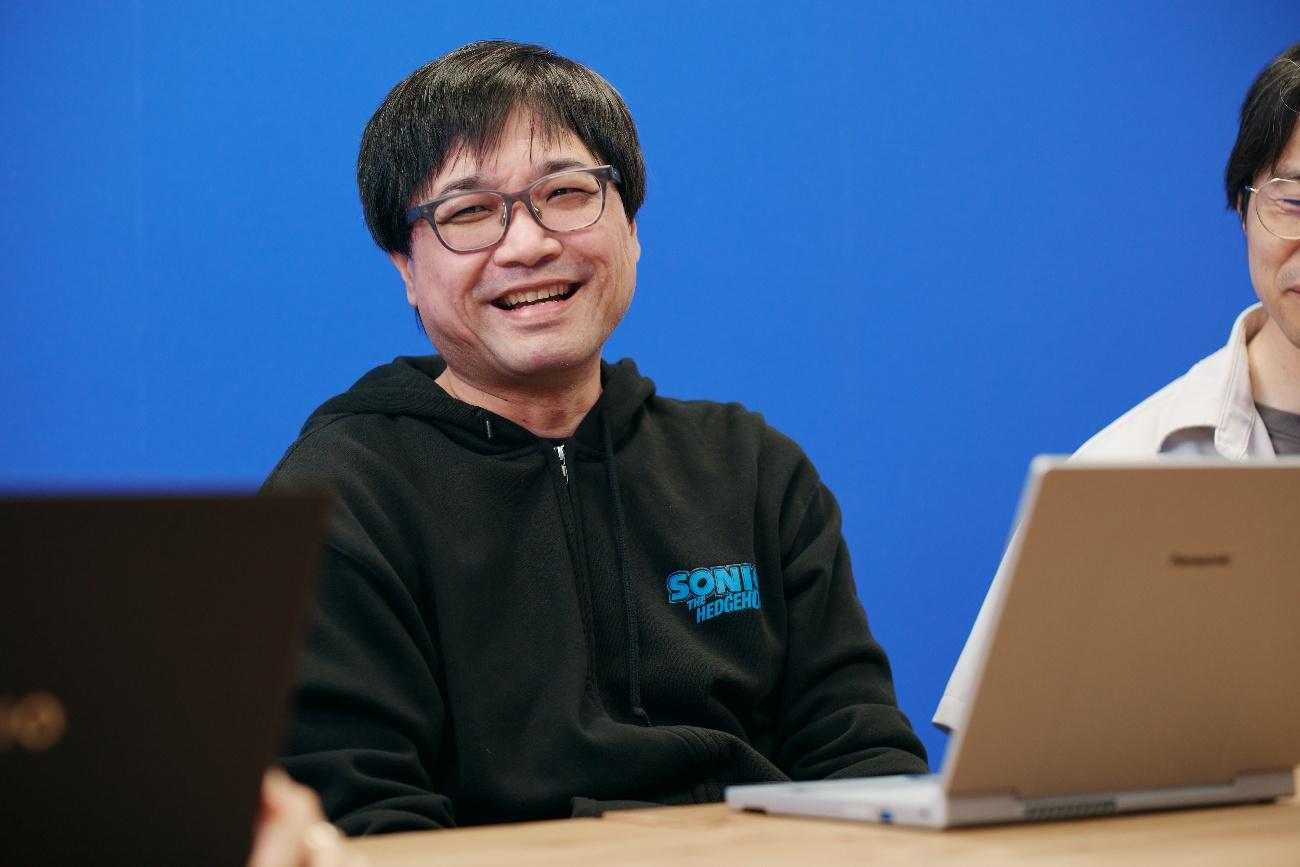
Art DirectorYuji Yamaga
Joined in 2004.
Joined the Sonic Team as a mid-career hire, where he worked on various titles including Sonic Unleashed, Sonic Generations, and Sonic Frontiers. Served as the game's art director up to its physical release.
Chief ProgrammerShumpei Takeyama
Joined in 2012.
Became a member of the Strategy Planning Department's technology section right after graduating from college. Worked as a programmer for INITIAL D ARCADE STAGE titles, House of the Dead Scarlet Dawn, and Sangokushi Taisen. Oversees Sonic Racing: CrossWorlds's programming and technical direction.
Composer & Sound DesignerKanon Oguni
Joined in 2018.
Contributed music to maimai DX, CHUNITHM, and O.N.G.E.K.I. after joining SEGA's Sound Development Department as a mid-career hire. In addition to composing part of the soundtrack for Sonic Racing: CrossWorlds, she also promoted the game's music and oversaw its audio direction.
Creating Surprises and Variety for Fans Worldwide
Sonic Racing: CrossWorlds marks SEGA's first Sonic Racing title developed entirely in-house. Sonic Team's console game developers teamed up with arcade racing veterans and rhythm game creatives to tackle unprecedented challenges, including the CrossWorlds mechanics, gadgets, cross-platform multiplayer, crossovers with numerous IPs, and a global marketing campaign.
In this feature, the game's team offers some insight into what it was like behind the scenes. We learned what makes developing Sonic titles at SEGA so exciting, the sense of scope when creating a global title, and how each role shaped Sonic Racing: CrossWorlds's unique gameplay.
What was the spark behind this project's creation?
Park
Up to now, we mostly had external partner studios developing the Sonic Racing titles. For this project, we set out to make the biggest title yet in the series, fully leveraging the in-house knowledge we've cultivated through the development of arcade racers and console titles.
Kawakami
Right. While there was a bit of a team culture clash early on, we ultimately found a real sense of synergy. Yamaga and I normally work on console games, while Takeyama, Park, and Oguni came from the arcade team.
By bringing people from such different backgrounds together, we got off to an exciting start.
During development, what were you most particular about? What did you find challenging?
Kawakami
Two keywords drove the project: surprise and variety. This led us to create the game's Travel Ring mechanic. During a race's second lap, it transports players to a CrossWorld—an alternate universe course—to add an element of surprise. In addition, object placement and routes change each race, creating variety for players. This helps every race feel fresh, even on the same course. We also added Gadgets, which grant various effects when equipped. Players can customize 6-Gadget loadouts tailored to their racing strategies. Early on, their effects were more subtle. However, to truly bring out the game's uniqueness, we decided to make them powerful enough to significantly impact how races unfold.
Yamaga
Of course, we put an emphasis on simplicity when adding new features. Players of all ages should be able to quickly grasp the game, so we designed everything from the courses to the UI icons to be easy to understand. We were constantly experimenting with how players transition into CrossWorlds in the second lap, trying to ensure the experience felt intuitive.
Oguni
We also focused on variety in our sound design, so players wouldn't get tired of hearing the same tracks again and again. Drawing on our rhythm game experience, we structured each song's hook and melody to fit within a single minute. We strove for an arcade game feel, where the music would change every lap. Finding the right balance between the music, sound effects, and voice acting required careful tuning, as we wanted each element to stand out while still being harmonious overall.
Park
While polishing our core gameplay, we especially put a lot of effort into crossover content. We worked closely with the teams behind globally beloved series like Minecraft, SpongeBob SquarePants, Pac-Man, and Mega Man to bring our paid crossover content to life. As for the free content, all of SEGA came together, bringing Hatsune Miku, Ichiban Kasuga from Like a Dragon, Joker from ATLUS's Persona 5 Royal, and Red from Rovio's Angry Birds on as racers.
Kawakami
Looking back on it now, the CrossWorlds, Gadgets, visual clarity, sound, crossover content, and even the online features all add up to the game's unique identity. Though development came with many challenges, the result offers thrills like no other.
What was the biggest technical challenge you faced during development?
Park
Traveling into CrossWorlds. It's one of the game's defining features, and we had to put in a tremendous amount of work to get from the initial outline to the real deal. You should hear the stories from our software engineers and artists.
Takeyama
Haha, it sure was tough. In my eyes, cross-platform multiplayer posed the biggest challenge. Connecting players across Switch, PS5, and PC—and across countries—was a feat with almost no precedent in the industry, but we were determined to have cross-platform play ready at launch. We faced numerous technical setbacks in developing a system that could seamlessly connect multiple courses. To name one, the player in first place can choose between Travel Rings that lead to different CrossWorlds. It was difficult to synchronize that choice across the network. In this game, you could potentially have matches between players in Japan and players as far away as Brazil, meaning there could be substantial network latency. Because of that, we established internal rules for course design and vehicle speeds to ensure the Travel Ring selection system would still work even under worst-case conditions. The planning team worked closely with us to keep the game technically feasible without sacrificing fun.
Park
SEGA offices around the world helped out, and because of time differences, we often ran tests late at night.
Takeyama
Right. Since we could only begin with internal tests, we enlisted the help of other SEGA branches and repeatedly conducted cross-region network tests. It was tough logistically. Because of all the time differences, our team sometimes had to run tests after the last train home. Using the data we gathered, we built a network infrastructure that'd support reliable long-distance online play, then refined it through the Closed and Open Network Tests. When we held the Open Network Test a month before launch, we discovered a major network issue. I vividly remember all 300 members of the 2nd Development Division mobilizing to fix it within 2 or 3 days. Although the Network Test pushed us to our limits, it reached almost 1 million downloads, helping us both improve the game's functionality and earn player trust.
Kawakami
As players choose between courses mid-race and dive into other worlds, the Travel Ring may feel slick. In reality, it relies on complex behind-the-scenes technology.
Takeyama
Agreed. To simultaneously display multiple courses under different lighting environments, we needed to heavily modify Unreal Engine 5's rendering system. Unlike other versions of the game, the Switch version uniquely uses Forward Rendering, which effectively doubled the rendering engineers' workload with every modification.
* Forward Rendering is a traditional lightweight rendering method that reduces hardware load, making it well suited for consoles like the Nintendo Switch, which have limited processing power.
Yamaga
As a racing game, the courses can make or break the game's quality. Developing a course editor from scratch marked a major breakthrough, letting us freely create enough tracks to race on. Traditionally, game designers would first design a course concept, and artists would then create the environments. Once environments were done, there would only be 1 or 2 chances to revise the layout, and the entire cycle took a tremendous amount of time. That's why we made it so that game designers could directly adjust parameters and test courses on the spot. Without the editor, I don't think we could have achieved either the quality or quantity of the courses you see in the final game. When we teamed up with our technical artists to make an editor, there was no guarantee we would succeed, but we pushed through the challenge.
Oguni
Creating music for the game's multiversal races was also tough. We wanted the audio to bridge the different worlds featured in the first, second, and third laps, so we set out to make the music transitions sound seamless. However, there was no technical precedent for it. Though difficult, we felt greatly rewarded when the end result let our musical transitions surprise players and set the mood.
How did you make the game's third-party crossovers happen?
Park
We incorporated crossover content as a way to generate constant buzz around the game long after launch, and to make it a fun experience for longtime Sonic fans and series newcomers alike. Rather than focusing only on the launch window, we envisioned a long-term future for the game as a live-service-style title. Crossovers with third-party IPs would serve as one of its cornerstones. Now, thanks to close collaboration with internal and external IP holders, our team has gotten audiences from all sorts of fandoms curious about Sonic Racing: CrossWorlds and eager to dive into the Sonic universe.
Kawakami
When putting together proposals for our partners, we always made sure to include fans of each crossover IP on the planning team and to incorporate their perspectives. At that stage, position didn't really matter. What mattered was giving a stronger voice to team members who were part of those fandoms, which led to a fascinating team dynamic. We aimed to make our in-game content feel like love letters to each IP. For example, we created a Mega Buster item for the Mega Man course.
Yamaga
The developers at Mojang Studios stayed in close communication with us throughout the entire process of developing the Minecraft course. They suggested that the pixel sizes of the vehicles, characters, and environments should match the original game as closely as possible, so we adjusted the visuals right up to the limit. The opening jump with a sprawling view of Minecraft's different biomes was an idea that came from their side too. Implementing their requests was unexpectedly tough, but looking back, I'm really glad we followed through, because the DLC feels so authentic.
What did you learn while preparing the game for a global audience, and what approaches did you take?
Park
One of the biggest challenges was keeping our regional teams on the same page, while still delivering the core Sonic experience that makes this game special. For this project, we worked closely with offices around the world, including Sega of America, Sega Publishing Europe, SEGA Publishing Korea, SEGA Taiwan, and SEGA Singapore. Since player preferences and media landscapes differ greatly across regions, we didn't want every decision to come from Japan. Instead, we listened to each regional team's ideas on how to best convey the game's appeal.
Yamaga
Text length and on-screen readability actually vary significantly between languages. While designing UI and other assets, we made sure that longer text would still be easy to read and fit naturally on the screen. For a global title, these small details really add up. They're essential if we want players everywhere to experience the same level of quality.
Kawakami
Sonic has an especially large fanbase in the United States, so we gathered extensive feedback and conducted numerous playtests there. As our development team is primarily Japanese, we learned a lot from what local players had to say. They were especially vocal about how CPU opponents in the test build were unnaturally hard to shake off in Grand Prix mode. In response, we adjusted CPU racers to fall behind after taking hits, and made it so that the same characters wouldn't always finish in first and second place. This made races feel more realistic and less stressful.
Oguni
Japanese players have very different musical tastes from players elsewhere, especially those from the West. It took us some time to get a feel for those preferences. Throughout the game's overseas playtests, we collected feedback on the music from players. This proved key to understanding the genres and styles that resonated with them.
Kawakami
We also attended different events around the world, right?
Park
Haha, yeah! We all split up and traveled all over the world. In addition to our big reveals at The Game Awards 2024 and Summer Game Fest 2025, we showcased the game at events across the globe, including an exhibition at the Esports World Cup in Saudi Arabia, BiliBili World, gamescom, and Tokyo Game Show. We also treated the Closed and Open Network Tests not simply as debugging checks, but as important global marketing opportunities to introduce the game to players as early as possible and build anticipation.
What kinds of challenges did you face during the game's promotional phase?
Yamaga
One thing that really stood out to me about this project was how many opportunities there were to work with IPs beyond Sonic. Handling Hatsune Miku content for Project Onsoku was an especially refreshing experience for me. I came up with my own ideas while learning from team members who were more familiar with Miku. One idea that emerged was graffiti-inspired decals of the Sonic characters. The final result captured both the cuteness and style that felt perfect for a Miku crossover.
Oguni
The audio team and I also got deeply involved in the game's marketing efforts. Producing tracks for Project Onsoku and the Crazy Raccoon collab wasn't easy, as we had a tight schedule. But in the end, I'm glad our efforts brought the game to a wider audience. We really got to demonstrate what makes Sonic and this title so exciting beyond the in-game soundtrack.
What's it like being on the Sonic Racing development team?
Park
The Sonic Team is a lively place with lots of day-to-day communication. You can approach us easily and casually share ideas or concerns on the spot, regardless of role or rank. We've even arranged the seating to stimulate organic conversations between team members. Takashi Iizuka, the Head of Sonic Team, joins us for weekly meetings, and younger staff often have chances to pitch ideas directly. Our workplace offers a lot of opportunities.
Kawakami
From the start of development, our goal has been to build a racing game like no other. That mindset spread throughout the team, so discussions naturally centered around whether each new feature would help us reach that goal. We also held play sessions almost every day, giving us plenty of chances to share feedback on how to improve visuals and game balance.
Takeyama
Our team thrives on active discussion. Everyone is constantly thinking about solutions and how to make the game more fun. That naturally leads to a lot of idea sharing. Younger team members also have a great deal of autonomy. With veteran staff there to support them, they can take on difficult tasks with confidence.
Oguni
When I joined in my mid-20s, I handled a wide range of audio-related duties, including sound design, finding artists to collaborate with, and music direction. Being entrusted with so many different responsibilities at such a young age was an incredibly valuable experience. As Takeyama mentioned earlier, if you demonstrate real know-how in something, we'll trust you with it. I feel people can really leverage their strengths and steadily build their skills from a young age here.
Do you have a final message that you'd like to share with the people reading this?
Park
The one point I really want to get across is that Sonic is a massive global IP with fans all over the world. Not many Japanese game IPs have maintained their global popularity for so long. Whether we're working on development, marketing, operations, collaborations, or events, we're always thinking about how to reach audiences beyond Japan. The global scale of working on Sonic is one of the most exciting things about being part of SEGA. It's an exciting place to be for anyone who wants to compete at a global level.
Kawakami
I find that the most rewarding part of our work at SEGA is delivering a brand that can truly stand alongside the industry's top IPs. Sonic never stands still—the series keeps growing through games and films. Being on our team can be a huge opportunity, since there aren't many chances in the gaming industry to lead the way on an IP that has so much momentum.
Yamaga
After all, the challenges and rewards of creating a title while working with IP holders and regional offices around the world are experiences you can only have with a global franchise like Sonic. Having worked on Sonic for many years, every time I see how widely recognized and celebrated the IP has become worldwide, I feel lucky to have been part of that journey. We're looking for people who want to help us continue down that road together.
Takeyama
On the technical side as well, we get a lot of curveballs. Development challenges like cross-platform support, online multiplayer across regions, and simultaneously loading multiple courses really put our skills to the test. However, overcoming those challenges felt rewarding, because it led to a game like no other. We hope to see people who want to take on seemingly impossible challenges and face them head-on with us.
Oguni
Even in specialized roles like audio design, you're encouraged to share ideas that improve the game as a whole. If you'd like to prove yourself early on in your career, or want to channel your passions into something productive, you'll enjoy working here.