COMPANY
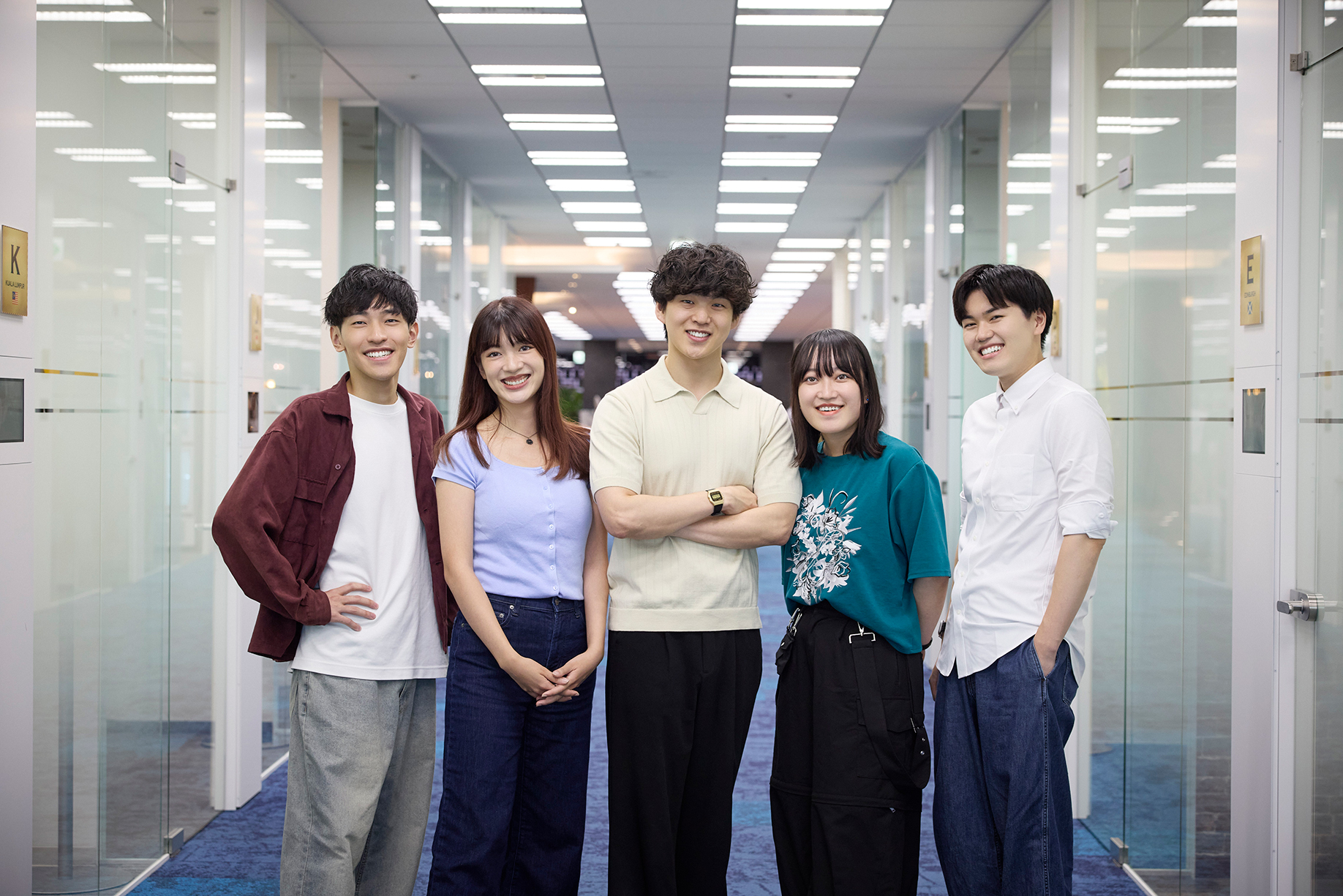
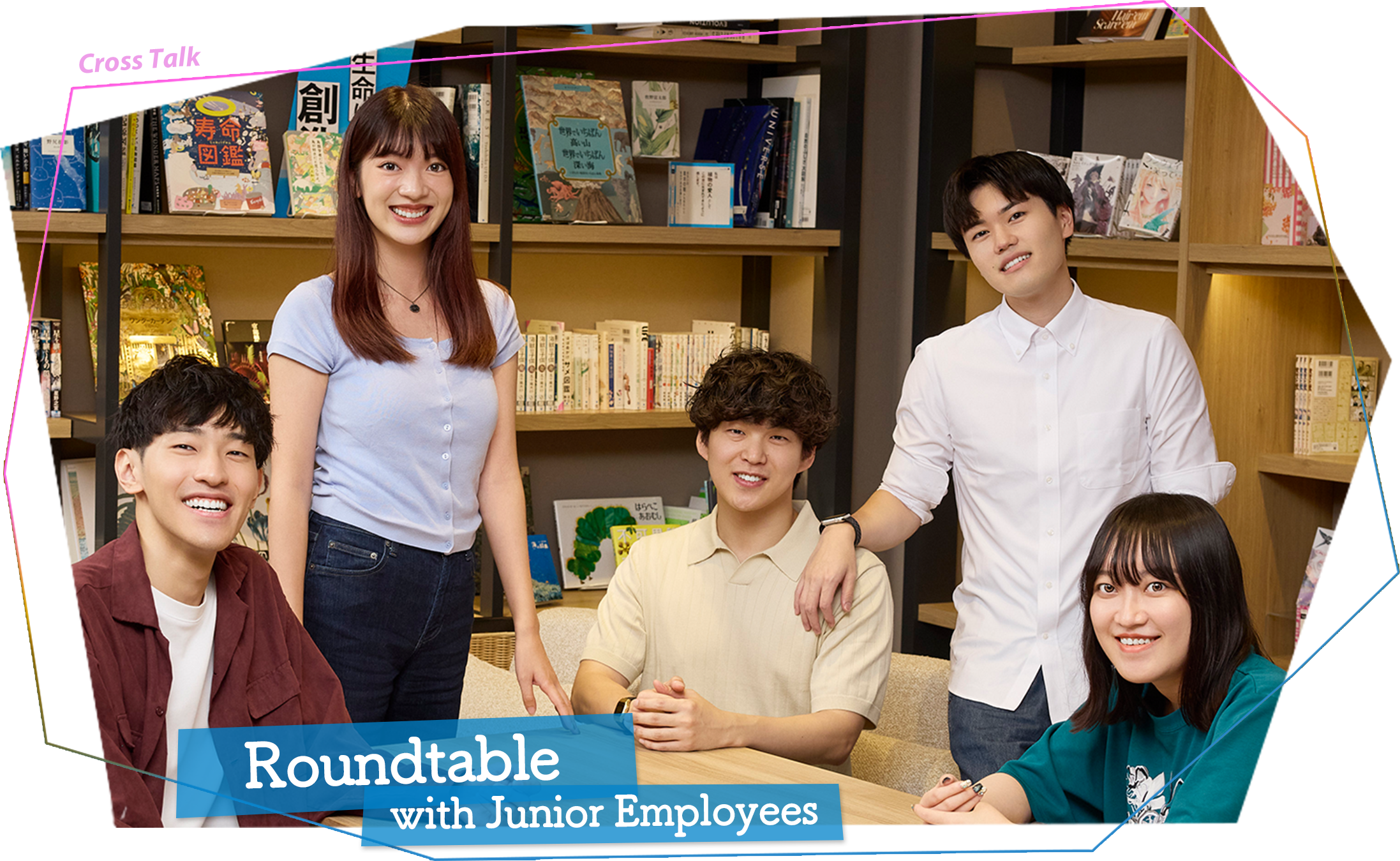
Five junior SEGA employees
give the inside scoop on corporate life
We sat down with 5 junior SEGA employees to get an insider's perspective on company life.
Topics ranged from their pre-SEGA paths to company culture, current tasks, and future ambitions.
Read on for real talk from 5 workers with different roles and backgrounds.

J.T
Joined in 2024 General Staff
From Hong Kong. Speaks 4 languages. Oversees social media operations for mobile games in Europe & the U.S.

R.X
Joined in 2025 Artist
From China. Joined SEGA aspiring to work on the Like a Dragon & Yakuza Series. Creates UI designs and specification proposals.
R.K
Joined in 2025 Game Designer
Part of the operations team for SEGA FOOTBALL CLUB CHAMPIONS.

Y.H
Joined in 2025 Programmer
Supports game development from a technical perspective, developing an automated testing system.
H.K
Joined in 2025 Sound
Began making music as a student. Currently works on game audio development.
― Q1 What was SEGA's recruitment process like?
J.T
I applied as a senior in college, while I was studying abroad in England. There were around 5 rounds of interviews. The first was just to make sure I could speak Japanese, and then I interviewed for the positions I wanted in marketing and business management.
I wrote that I could speak Japanese, English, the Beijing dialect, and Cantonese on my application, and they checked to make sure that I could actually use each of those. Incidentally, due to a little misunderstanding about the time zones, my final interview ended up being at 4 AM local time, haha.
R.X
Oof, that's early! As for me, I was scouted for a SEGA college program when I put some of my work on a portfolio website. I ended up doing 2 programs before I applied.
I majored in graphic design in college, but I also learned about video and animation, so I wonder if those skills were part of the reason I was selected. SEGA was my first choice because I've always loved the Like a Dragon & Yakuza Series. In fact, I love them so much that I thanked my interviewers for making such amazing games, haha.
R.K
SEGA was my first application during my job search. I originally applied for a business support job, but I ended up switching to game design after doing a deep dive into my career ambitions during my interview with HR.
Afterward, I did the one-day college program to learn more about the game designer role. At each interview they gave me feedback about what I'd communicated clearly, so I was able to improve as I went. I wasn't super familiar with SEGA games at the time. To me, I cared more that all the employees had been so kind during the process.
Y.H
I was actually also invited to the one-day college program, maybe because they liked the work I submitted as part of my application for the three-day program, and I went on to apply from there.
What stuck with me was how nice the HR person was after I got the job offer. I mentioned that I was still waiting to hear back from other companies, and they said that they were happy to wait and wished me luck with my other applications. I really liked that.
H.K
At the beginning of SEGA's screening process, I had to submit some of my own work. The assignment was to create something that delivered a moving experience for the audience. I submitted a song I'd been working on as a hobby and some sound effects that I'd studied up on for my job search.
I recall there being a senior employee at the interview who had looked at my submission in detail, pointing out parts he liked and asking me specific questions about how I made it. That made it easy to discuss my work.
R.K
There are opportunities to get feedback, and you can tell that they see who you are as a person through your work.
― Q2 What surprised you when you joined the company?
H.K
I was surprised by how much responsibility they're willing to give junior employees if you're willing to volunteer. I've been able to do everything from sound production to implementation, proposals, and working with composers.
J.T
Before I joined, I thought things would be pretty regimented, since it's a big Japanese company. After I started, I realized that's not true at all. You're basically free to wear what you want, for starters. I even saw somebody wearing a yukata! I was surprised by how much freedom there was.
In college we learned that it was proper business etiquette in Japan for junior employees to work the elevator buttons, hold open the doors and things like that. Here it's usually the bosses and senior employees doing it though, haha. It's really a much flatter organization than I had imagined.
R.X
Very true. I had envisioned Japanese companies would be pretty formal, but that hasn't been the case at all. The senior employees have been really friendly, and there's a relaxed atmosphere that makes it easy to talk to people. There are a lot of senior international employees as well, so it's easy to get help from people if I get stuck.
Y.H
I was surprised by the support systems in place here. They don't throw things at you and expect you to do them on your own. Before I started working at SEGA, I thought the game industry must be laser-focused on performance. In reality, one-on-ones with my manager and team post-mortems are carried out with a lot of care and respect.
New employees don't always have a lot of results to point to, so everyone also looks at your processes and gives constructive feedback.
R.K
For me, there was a perception gap in regard to the role of a game operations designer. Before I started here, I thought you just had to do things that players would find fun, but in reality you have to be sure those things are realistic for the dev team and are economically viable. So I learned that balance is key when it comes to this role.
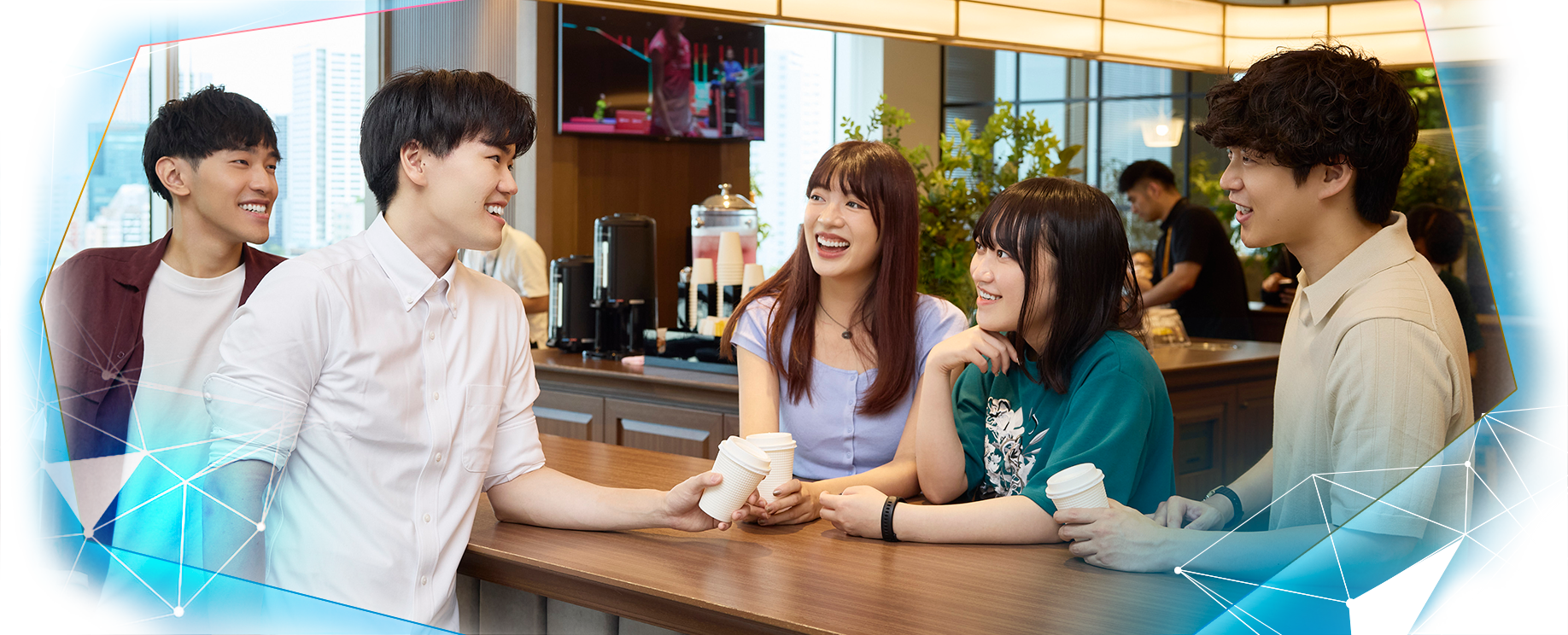
― Q3 What are your teams like?
R.K
My team manages the operations for SFCC, so a lot of us are soccer fans. During the World Cup, the first thing we did when we came to work was talk about matches from the day before. We had a big tournament bracket stuck to the wall, and I wrote in the match results.
H.K
Did you get some work done after that? Haha.
R.K
A bit, haha. We have a morning meeting, and everybody switches into work mode when that starts, and the same goes any time we talk about work. My team can be both fun and serious, depending on the situation.
H.K
My team is pretty flat in terms of hierarchy, and we talk about non-work stuff, too. On days off I go fishing or indoor rock-climbing with people who joined the company around the same time, and I've done a cooking class with a senior employee. We learned how to make curry.
J.T
My department has a really friendly atmosphere. We talk about games we like, play board games together, stuff like that. There are also some employees originally from overseas, so there are a lot of different languages flying around, and we have fun trading snacks from different countries.
R.X
UI design work relies on a lot of different people working together. We get specifications from game designers, request implementations from programmers, and ask for motions and assets from the people in charge of those. I also give feedback from time to time.
At first I wasn't sure if it was really OK to ask for so much, so I checked with senior employees. But I've come to understand that there's no need to hold back. Regardless of what job we do here, everyone shares the same goal: to make our games better and better.
Y.H
I've also experienced how easy it is to ask for help. When you ask a question, everyone both answers the question and helps you work out an approach that you can use next time you have the same problem. Sometimes people will sit with me for 30 minutes or an hour, just helping out.
And if they think someone might have a better idea, whatever their job title, they'll go and rope them in to help.
― Q4 What kind of work do you currently do?
Y.H
I'm building a system to automate game testing, something that can check for crashes and other bugs. If the automated tool runs overnight, by the next morning you can already look over the results. My mission is to reduce the time spent on testing so creators have more time to make their games.
R.X
As a UI designer, I turn the specifications sent over by game designers into on-screen interfaces. When I first started, just doing that much was tough.
For example, when showing values in-game, I would just show the numbers as-is. But a senior employee explained to me that there are ways to make that information easily comprehensible at a glance, like by using a gauge. I learned that UI work isn't simply displaying information, it's more about understanding how to communicate information in a way that's intuitive for the player. It gets quite deep, and I'm motivated to keep digging.
H.K
I work on audio development for some of our in-house projects. You can't just make high-quality sounds and call it a day, the intention behind them is the key ingredient. What do you want to communicate? What do you want the player to feel? And then there are also time and budget constraints to consider. We have to constantly be thinking about how best to use our time and energy to have the most positive impact on the game.
J.T
I handle mobile game social media operations for Europe and the U.S. What's interesting is how different user reactions vary by region. For example, in Japan it's seen as normal to post something every day, but in other countries that can be seen as too much. Even if the content we're communicating is the same, it will be taken in different ways in different countries and regions, so I have to decide how best to deliver that content.
R.K
I'm on the operations team for SFCC, and I work on the design for scouting lineups, login bonuses, promotions, things like that. In a single month we can have as many as 20 different implementations to manage, so it's important to keep an eye on the big picture instead of looking at things in isolation.
For example, if I feel there's not enough in-game currency, it's not as simple as just adding more. I have to plan things out, looking at what kinds of scouting lineups are coming to the game before and after and considering how users will feel over the course of the whole month.
J.T
Do you look at social media comments to gauge how users are feeling?
R.K
Oh, definitely. I also look at data like how much in-game currency we're giving out, how much users have, and whether or not they're using it. Qualitative and quantitative aspects are both important.

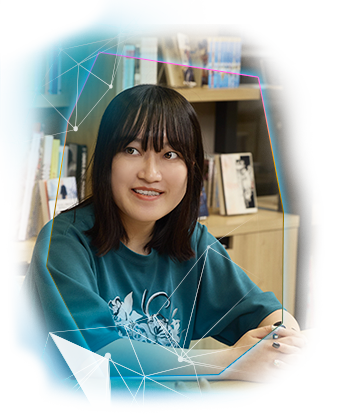
― Q5 Can you tell us about some of your successes and shortcomings at work?
H.K
One memorable achievement comes from my time working on the background music for Chunithm, an arcade rhythm game that's been dear to me since middle school.
After it came out, I went to an arcade with some friends, and one of the songs I worked on started playing from the game cabinet. I couldn't help but tell everyone I made that song, haha. I was just so happy to be part of a game that I've been playing for years and years.
In terms of shortcomings... Well, I overslept training, and kept my mentor waiting. I definitely learned my lesson.
R.X
That's not the sort of thing you forget, haha. As for me, I'm especially proud that I get to work on the games I loved. When I was in high school, I was totally hooked on the Like a Dragon & Yakuza Series, to the point where I got some platinum trophies. When they asked me to work on the title screen, I couldn't believe it.
After release, I was so happy when I saw a video complimenting the visuals of the title screen and. At Tokyo Game Show, I got to see people interact with the screen that I'd worked on, and it hit home that I was now on the team delivering these inspiring experiences.
H.K
A game's title screen is like its face, right? You did an amazing job.
J.T
My experience making a short video for the Southeast Asian market felt especially rewarding. Previously, character trailers were about 2 minutes long, and viewing data showed that people were watching only about 10–15 seconds. So I decided we should make the next one just 15 seconds to see if we could get more views that way.
I recorded and posted some gameplay footage on my own and managed to rack up 190,000 views. It ended up being our most-watched video up to the game's release. It felt gratifying to be able to analyze viewer engagement and apply those insights to our content planning.
R.K
One of my successes was having my proposal accepted for SFCC's half-year anniversary. My idea was to give away scouting tickets for Brazilian players via missions and login bonuses. I wanted all our users to be able to enjoy the game, and when these giveaways went live, it was satisfying to know that more people could join in the fun.
I also realized there was a mistake in our announcement just before it went live. I managed to fix it in the nick of time, but it was a painful reminder of the importance of checking everything we do.
Y.H
I felt accomplished when the automated testing tool I made ran for the first time. Reducing time spent on testing gives creatives more time to make games, and in that moment I really felt that my work was supporting the developers.
On the other hand, when I was setting up the development environment, my understanding of game design and our team structure fell a bit short at times, and that ended up slowing down development. Things weren't easy, but I've reflected on my shortcomings and will be sure to keep those lessons in mind going forward.
My department handles a lot of different projects, so whatever I learn on one can be carried over to the others. Being able to improve the entire company's development environment bit by bit is part of what makes my work so fascinating.
― Q6 What do you consider important in your work?
R.X
As someone making games, it's important to look from a professional point of view while also keeping the experience of individual players in mind. I got into this line of work because I love games. I want to continue to hold onto that passion and that sense of what could make a game better as I work in the industry.
J.T
I'd say making sure to smile. There are definitely times when my job is stressful. To enjoy my work, first I have to put myself in the right mindset. That's why it's important to keep a smile on my face. It helps me maintain good relationships with coworkers and makes work-related communication smoother.
Y.H
I definitely get a boost from seeing your smile!
J.T
Thanks, haha!
H.K
Something that's important to me is a mindset I learned from my mentor: your work can be a privilege. After joining SEGA, I came to realize that my work isn't something I can do on my own. Being entrusted with the work I receive is only possible thanks to the support of the organization and those around me. I try not to take that for granted.
Y.H
Something I try to keep in mind is that what I learn isn't useful in just one context. I try to hang on to those bits of knowledge I gain and arrange them internally into something I can use for other tasks. I also take anything I felt was tough, or kind of a pain, or that I otherwise felt negatively about, and share it with the team to reflect on and learn from. I look back to the biggest pain points and look for ways to improve.
R.K
I think it's important to be clear about my own strengths and weaknesses. Languages are a strength, and I don't yet have enough practical experience as a game operations designer. To open up a wider range of tasks that let me make use of my language skills, first I need to buckle down and build up experience in that area. I'd also like to get some language proficiency certifications and make use of SEGA's study abroad program.
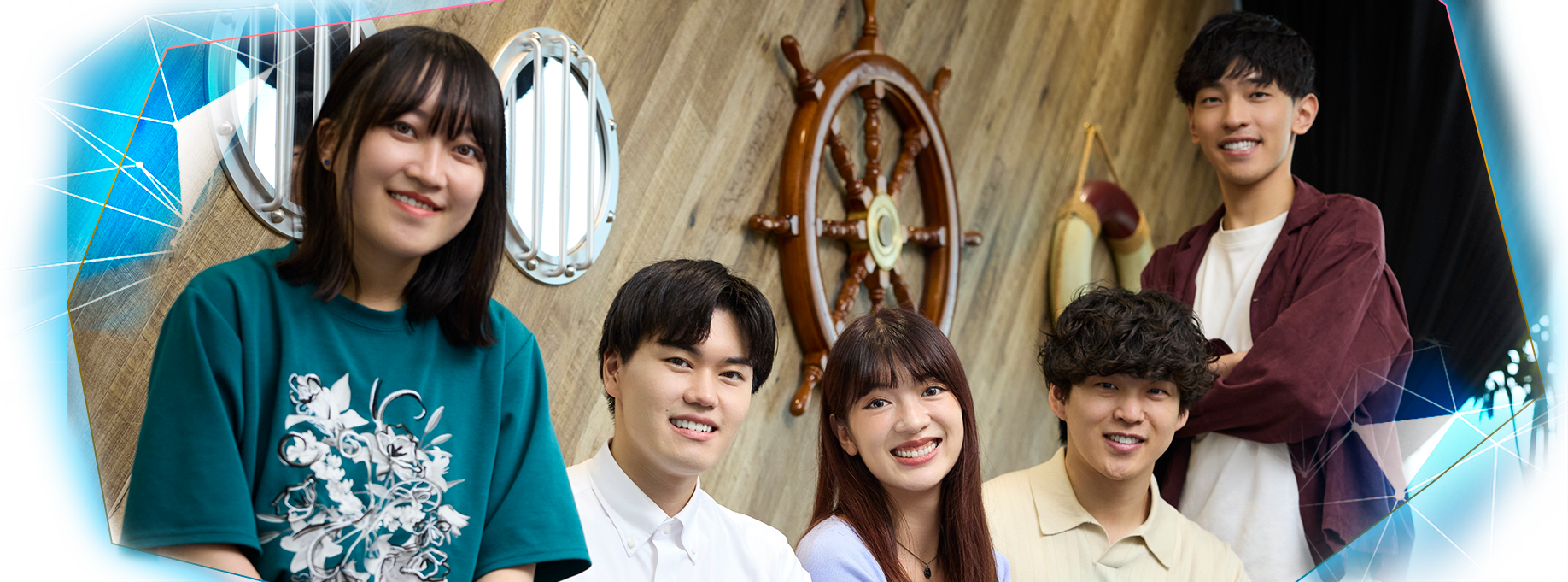
― Q7 What do you want to tackle next?
R.K
My goal is to learn game development and grow into someone who can do an internationally focused job. Rather than simply learning the necessary language skills, I want to become knowledgeable about operations and development, and be able to make games together with overseas studios. Ultimately I'd like to try managing a team at a studio abroad.
J.T
I'd like to try my hand at a lot of different things. Every new experience is another arrow in my quiver.
R.X
J.T., what's your motivation for wanting to bring Japanese content to the world?
J.T
I've loved Japanese anime since I was a kid. I love it so much that I learned Japanese by watching it. I want to make even more people around the world aware of Japanese games and media, so I have to learn everything that might help me do that.
Y.H
I’d like to expand the system we’re building to the whole company and link insights across projects. Recently my interests have expanded beyond tech to how to lead organizations and people. In the future I'd like to work on improving SEGA's overall game development from both an organizational and technical perspective.
R.X
I'd like to become an art director one day, and create an entire game's world. It might take 20 or 30 years to get there, but I've been watching the art director for my current project and it looks like such a cool job.
I really love the Like a Dragon & Yakuza Series, so someday I'd like that to be my main job. I want to make things that I find genuinely exciting.
H.K
I want to perfect my own style and skills, and become a creator capable of putting out world-class games. When I look at the senior employees I respect, I can see that I still have a lot to learn in terms of my own production capabilities and how I approach my work. Someday a major opportunity will arrive, and I want to make sure I'm capable of smashing it out of the park when it's my turn to step up to the plate. To get there, I need to keep working on my skills.
* This roundtable discussion was conducted in July 2026.