Interview with the
Online Mobile Publishing Division
MEMBER PROFILE
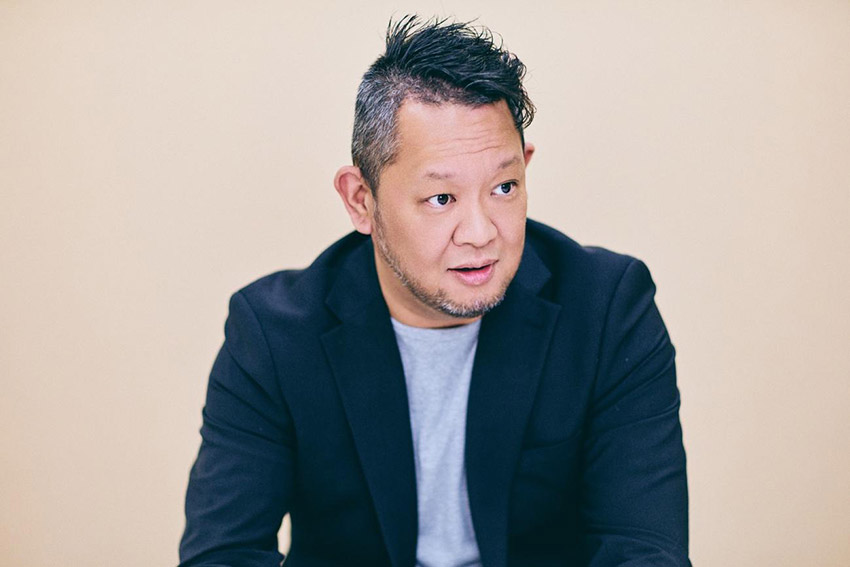
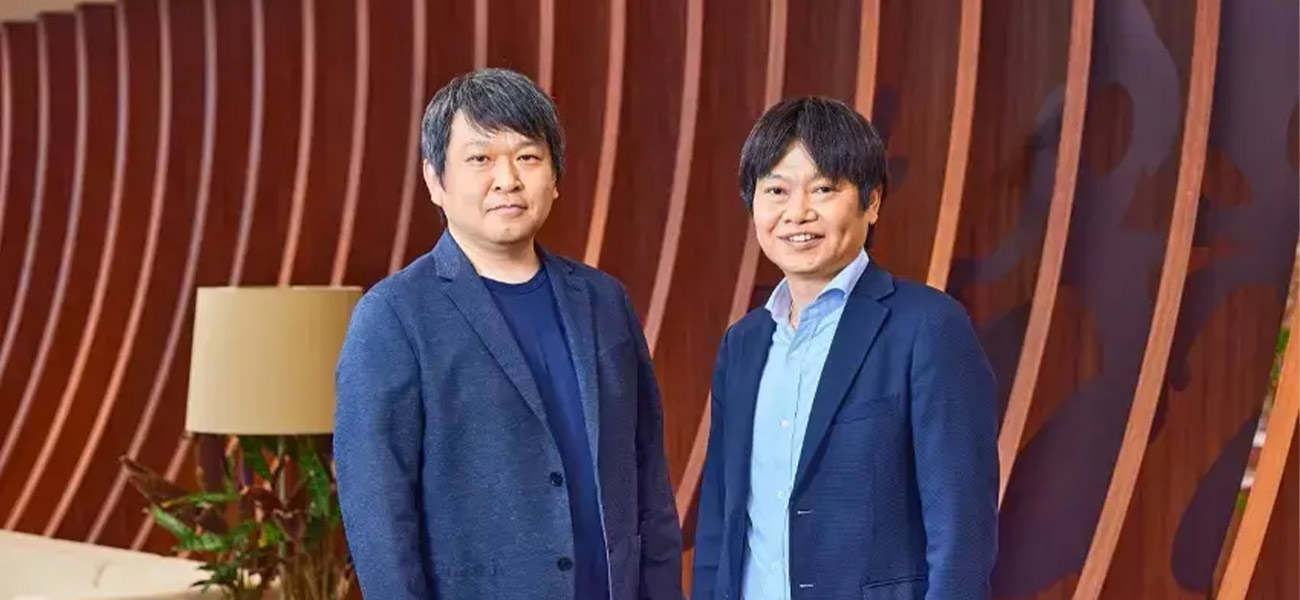
Head of Online Mobile Publishing DivisionTakuro Yoshihara
Joined in 2013.
Head of Online Mobile Publishing Division. Entered SEGA Network's Management Department as a mid-career hire. Gained experience in project management and marketing before transferring to SEGA of America in 2022. Took on a position as the Online Mobile Publishing Division's vice executive manager upon returning to Japan. Has held his current position since April 2026.
Director of Online Mobile Operation Strategy DepartmentTomoyuki Fujita
Joined in 2013.
Director of Online Mobile Operation Strategy Department. Entered SEGA Networks as a mid-career hire. Produces titles for smartphone. Has held his current position since April 2026.
The Online Mobile Publishing Division's Duty Giving Users a Reason to Keep Playing
As the mobile gaming market evolves and development costs rise, launching a successful title has become more challenging than ever. This change compelled SEGA to create the Online Mobile Publishing Division in 2024. Taking live-service operations off the hands of the 3rd and 4th Development Divisions, this new division began as a cross-functional team dedicated to the global growth and long-term operations of GaaS (Games as a Service) titles.
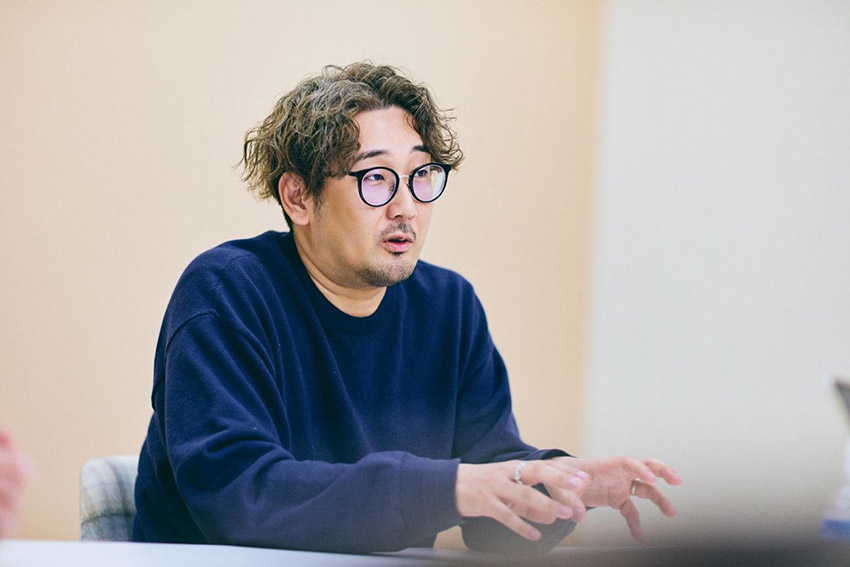
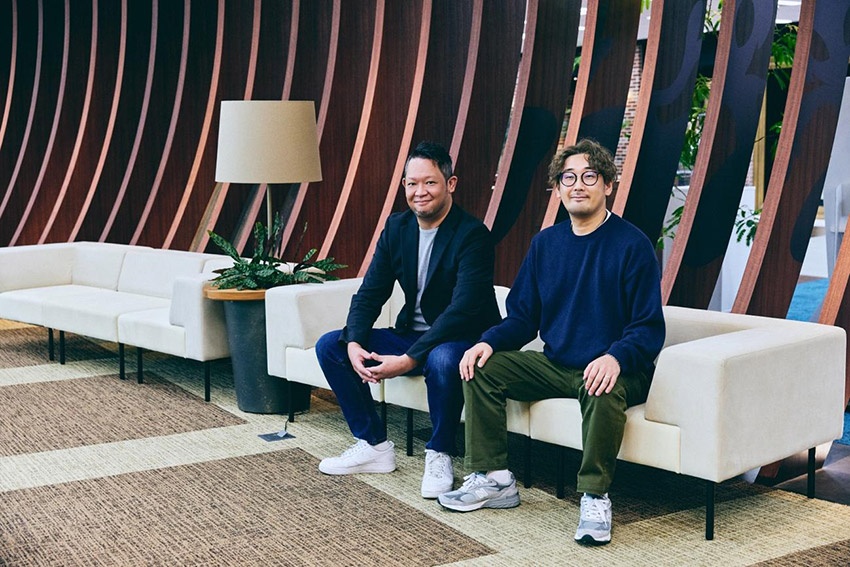
We had the chance to interview the Online Mobile Publishing Division's Senior Executive Manager Takuro Yoshihara and Manager Tomoyuki Fujita about the division's history, the challenges of the global market, the personalities that thrive on their team, and more.
Two Leaders at the Forefront of Game Operations
Could you tell us about your backgrounds and roles?
Yoshihara
I got my start at an advertising agency and then joined SEGA in 2013.
Through my time with the SEGA Networks project management and marketing teams, I served as a product manager and marketing planner for multiple titles. Through my time with the SEGA Networks project management and marketing teams, I served as a product manager and marketing planner for multiple titles.
Fujita
I entered SEGA Networks as a mid-career hire in January 2013. Shortly after, I transferred to SEGA and spent 3 years working on the business side of online PC titles, such as the licensing for Phantasy Star Online 2 and some Korean games. I then moved to SEGA Networks Roppongi branch, where I worked in development production on Saint Seiya Cosmo Fantasy, a joint project between SEGA and Bandai Namco Entertainment. That kickstarted my career as a producer. Since then, I've produced titles based on IPs like Fist of the North Star and even became manager of the Online Mobile Operation Strategy Department this April.
Yoshihara
We joined around the same time, starting our careers in different departments focused on live service ops. Whereas I went down a more marketing-oriented path, Fujita gravitated towards development. The two of us eventually came together when the Online Mobile Publishing Division was founded in 2024.
A Division of Specialists Dedicated to Global Expansion
What led to the creation of the Online Mobile Publishing Division?
Yoshihara
At the outset, we took over operational duties for the 3rd and 4th Development Divisions and became a new, independent entity. Two key factors motivated this decision.
The first was the increasing demand for expertise and expanding scope of operations management. In the past, monitoring the Japanese market was enough. As we set our sights globally, understanding the cultures and players of each region became a must. Now, operations work is far more sophisticated than it once was.
The second reason was to create a way to appraise future titles. In today's market, a high-quality game doesn't guarantee success. When development and operations are intertwined, it becomes difficult to take a step back and assess a project. SEGA decided that a team separate from the developers should evaluate whether a project would resonate with players and be worth the investment.
Fujita
Development, operations, and marketing each serve distinct functions. Devs focus on the core appeal of the game, refining its systems and features into high-quality gameplay. Conversely, our job in ops is to give players a reason to keep coming back for more.
All our teams follow a matrix structure, where members from development, operations, and marketing unite under one collaborative framework. We're the ones who primarily design in-game products and gameplay loops to keep players engaged daily.
What is your organization's mission?
Yoshihara
Our mission is to deliver and operate live-service titles worldwide over the long term. Ultimately, we're aiming to establish SEGA as a world-class leader in GaaS operations. We benchmark ourselves against blockbuster titles with millions of active players around the world.
To reach that level, we take on three roles. The first is assessing commercial viability: estimating a new title's ROI and potential to become a hit. The second is live service management, which involves initiating promotions and other strategies that best fit current market conditions. And finally, engagement. We devise strategies to ensure long-term player retention, while also gathering feedback from social media, reviews, and other external channels to relay to the devs.
Fujita
Including new releases, we currently operate nearly 20 live-service games. Rather than maintaining dedicated ops teams for each one, our division oversees operations across all GaaS titles.
Understanding Cultures and Building Trust: The Key to Operating Globally
As you expand internationally, which markets are you closely watching?
Yoshihara
Our biggest focus is the North American market. SEGA's future growth depends heavily on our success in North America. That said, the two of us honestly still have much to learn.
We may have had some success in Japan, but that doesn't necessarily carry over to the global market. For example, players in some countries actively voice their opinions, while those in others tend to be less outspoken. It's important for us to understand these differences and engage appropriately with the communities in each region.
Fujita
Understanding different cultures is the most important thing. People experience games differently across North America, Europe, and Southeast Asia because they live different lives. If we want our games to resonate with players, we need to understand and adapt to each culture.
Engagement is listening to feedback and building trust. In Japan, the US, and Europe, it's common for players to share feedback with us through social media and other platforms. As such, building players' confidence in SEGA forms the foundation for long-term operations.
How do you view the competitive landscape in the global market?
Yoshihara
In recent years, Chinese game companies have significantly expanded their presence in the market. They first thoroughly test their games in the domestic sector. Once proven successful, they go global with enormous advertising budgets. It's difficult to compete on the same playing field in terms of scale and spending.
That's precisely why we want to focus our efforts on the fan base SEGA has built over the years. Generations that grew up with the SEGA Genesis (Mega Drive), SEGA Saturn, and our other consoles continue to hold SEGA products in high regard, especially overseas. Another major strength unique to SEGA is that a large portion of Sonic fans are also SEGA fans. Building on and reshaping the established identities of the SEGA brand and Sonic is our competitive edge.
Fujita
SEGA's hardcore fan demographic largely consists of people in their late 30s to 40s, but we also have titles like HATSUNE MIKU: COLORFUL STAGE! that are especially popular with younger generations. By steadily building communities around our titles and fostering trust with players, we aim to expand the SEGA brand's fan base even further. Those efforts are the foundation that will support us for decades to come.
Flexible Groundwork for Long-Term Operations
What do you consider important in running live-service games for a long time?
Fujita
Our main focus is to give players reasons to keep coming back to our games. While the developers' mission is to make fun games, our job is to give players incentive to log in each day or return after a break.
To achieve that, we meticulously brainstorm everything, including daily content, gameplay loops, and rewards to raise player motivation. For example, we consider whether a particular reward will entice players to invest more time into progression. Planning content that effectively achieves those goals is where live-service operations expertise comes in.
Yoshihara
One of the biggest boons of our division has been the ability to share knowledge across different titles. Previously, successful initiatives were often confined to individual game teams, but now we have a centralized framework for analyzing those successes and sharing the lessons across teams.
Let me give an example of how we plan events for international audiences. If we determine that it's important to run sales around Thanksgiving in North America, we apply that approach to all our titles. Each game has a different player base, so reusing a particular approach isn't always the key to success. Even so, I feel that our ability to analyze what made something successful and apply those insights to other titles is one of our team's biggest strengths.
What strategies do you use to improve a new title's odds of success?
Yoshihara
We're involved in the initial planning stages, assessing whether a title is a good fit for the current market. Then, just before launch, we ensure the game reflects all of SEGA's best practices for live-service operations. The most important thing is to set the bar high from phase one. We've put a lot of effort towards that goal, and have seen results.
Currently, no new title can move forward with release unless we give the green light. Even if the devs are eager to launch, we speak up if we believe a game still isn't ready from an operational standpoint. We've built the kind of working relationships and track record over time that make those discussions possible.
Fujita
Soft launches and early access have also become valuable strategies for us. Soft launches let us test a game in regions that are culturally similar to the game's main markets and make improvements before the official launch. Early access periods let us gather feedback from hardcore fans and improve reception before the official launch.
Once a game receives negative reviews, it's extremely difficult to salvage its reputation. That's why establishing positive word of mouth from the start is one of the most important factors in sustaining a long-term live service in international markets.
Generative AI's Limits: The Role of Human Judgment in Planning and Operations
How are you incorporating generative AI into your work?
Yoshihara
Our division uses generative AI as a tool to improve our speed. For example, we use it to summarize feedback from players, compile numerical data, and run preliminary checks to make sure promotions comply with consumer protection laws. By streamlining time-consuming review tasks, we've gained greater flexibility in planning initiatives.
Our team can adapt quickly, even when unexpected issues arise. Timely responses are important in live-service operations, and that's why we believe effective use of AI can help.
Fujita
At the same time, we're being careful to not place too much trust in AI. It's proven to be extremely helpful for tasks like compiling numerical data or translation assistance. However, when it comes to inference work or analysis, AI is prone to producing results that look plausible but are actually incorrect. That's why we utilize AI strictly as a support tool.
While I expect the technology to evolve rapidly and become even more useful, we believe it's important to maintain a clear division of roles in which AI generates suggestions and humans make the final judgments.
Autonomous, Collaborative Teams Delivering the SEGA Experience on a Global Scale
What kind of future do you envision for your division?
Yoshihara
Our goal is to have world-class skills in live-service operations. Rather than focusing on metrics alone, we want to build an organization that continuously engages with players and improves its services through both data and human insight.
While there's plenty we can learn from the speed and processes adopted by Chinese companies, SEGA has built a robust fan base and goodwill over many years. Our players' faith in the long-term success of our games and services is a strength that few competitors can match. By preserving that trust, we aim to develop the operational capabilities needed to compete on a global level.
Fujita
We need to strike a balance between ambition and caution. In today's market, where new titles face tougher odds of success and there's greater pressure to make major investments, we continue to pursue innovation. That's why we want our division to embrace change and take on new challenges, such as our use of AI.
What kind of people do you think would be a good fit for your team?
Yoshihara
We value people who love games and understand players. Our work boils down to connecting with players, so we need people who grasp how they think and feel.
Beyond that, I look for three key skills. The first is quantitative data analysis. In other words, the ability to assess and analyze player trends in concrete metrics. The second is logic-based communication. Being able to clearly articulate analytical findings to developers. The third is adaptability grounded in awareness. The market, players, and even the way people use social media are constantly changing. To succeed here, one needs to recognize those shifts and adapt in ways that resonate with players.
Fujita
What I value most are people who can share their insights with others. Being able to recognize meaningful patterns in data is certainly important, but I consider the ability to communicate those insights clearly to others to be just as valuable. You also need the grit to keep refining your ideas without losing heart when a proposal doesn't work out.
SEGA has a very open-minded culture and isn't dismissive towards new ideas. We give new employees the opportunity to work on game proposals. The two of us are where we are today because we kept putting forward ideas. We want people who stay focused on the goal itself, instead of being hung up on a particular method of reaching it. As such, we'd be excited to welcome people with that adaptive mindset and grit.
* This article contains content from an interview conducted in April 2026.